
Elijah Bible stories for kids
Elijah is the loudest prophet in the Bible and, for one chapter, the most frightened. He walks into a king's palace and announces that it will not rain, calls down fire on an altar he has had soaked with water, and then, a few days later, is lying under a desert bush telling God he has had enough. Children rarely hear that second part. It is the part that makes him a person rather than a special effect.
These five stories run from 1 Kings 17 to 2 Kings 2, about thirty-five minutes end to end, and all are told for ages 3 to 8. They are written to be heard in order: each one opens by remembering the last, and the final one hands Elijah's cloak to Elisha, whose own stories carry on from there.
5 stories, about 35 minutes of listening
Elijah’s story, in order
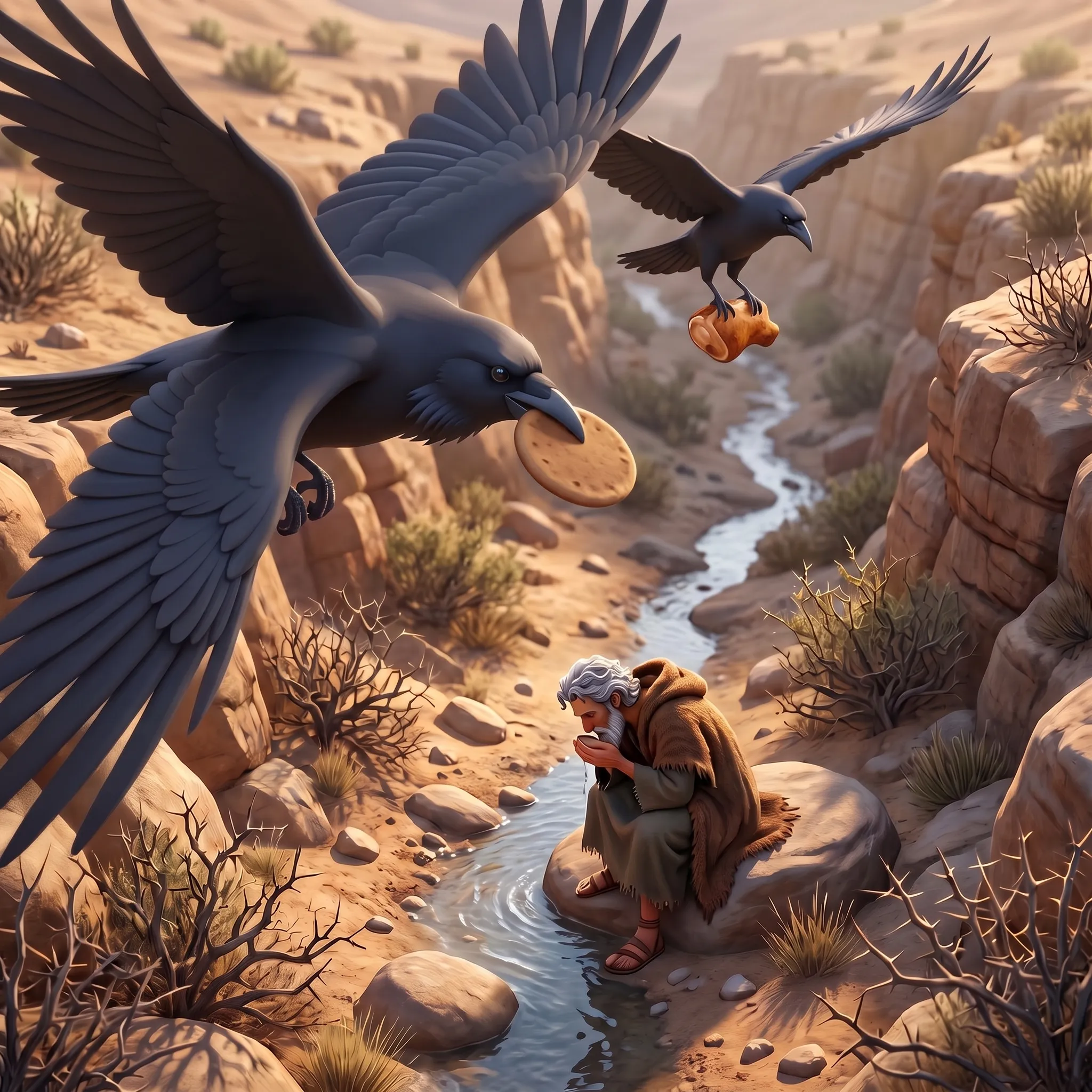
Elijah and the Ravens
Elijah tells a king that the rain will stop, and then God sends him to hide beside a lonely brook with no food at all. Help is coming, but not from anyone Elijah would have guessed.
1 Kings 17:1-7, 3 min, ages 3-8
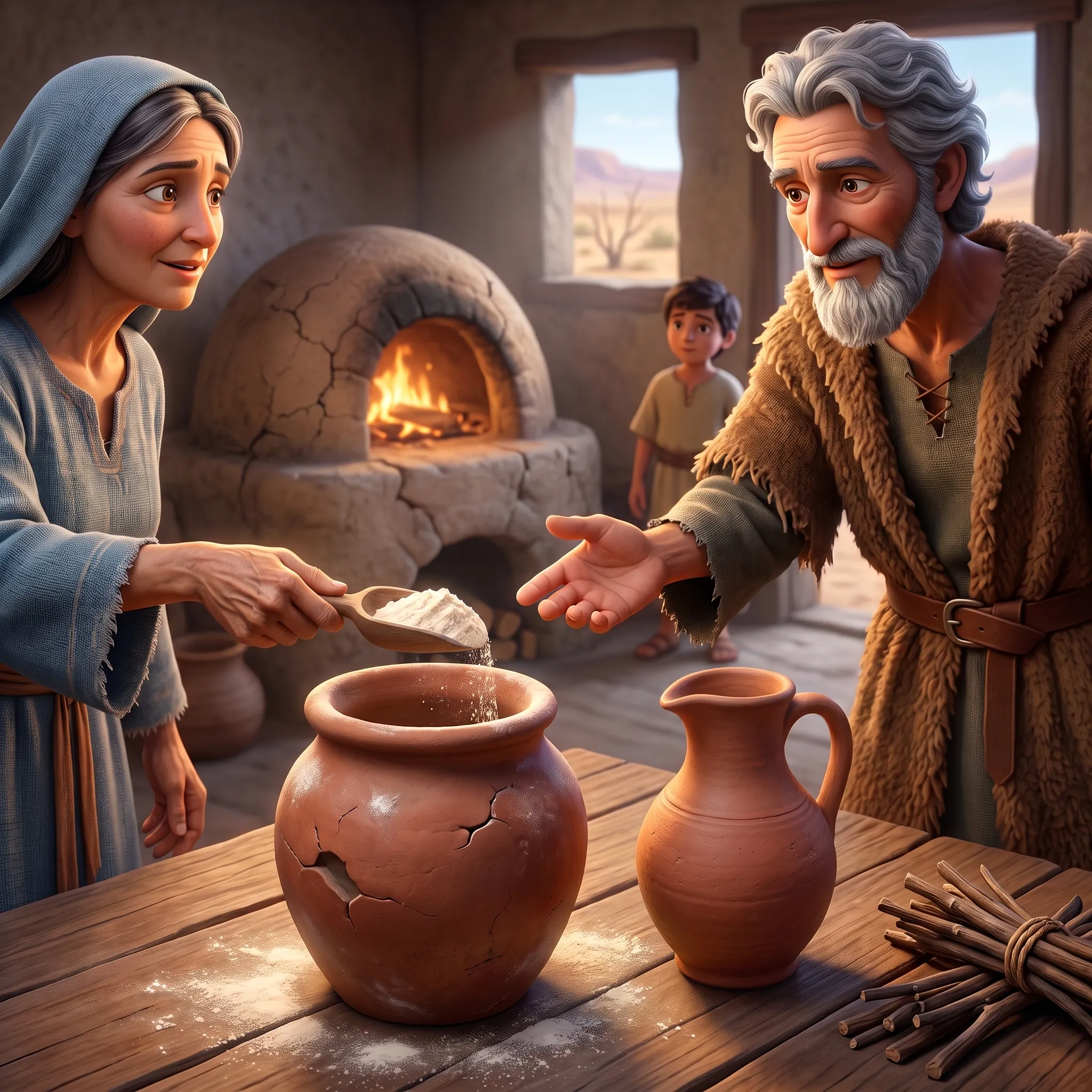
Elijah and the Widow of Zarephath
In a town far from Israel, a mother gathers sticks to bake the very last meal she has for herself and her son. Then a tired stranger at the gate asks her for the one thing she cannot spare.
1 Kings 17:8-16, 8 min, ages 3-8
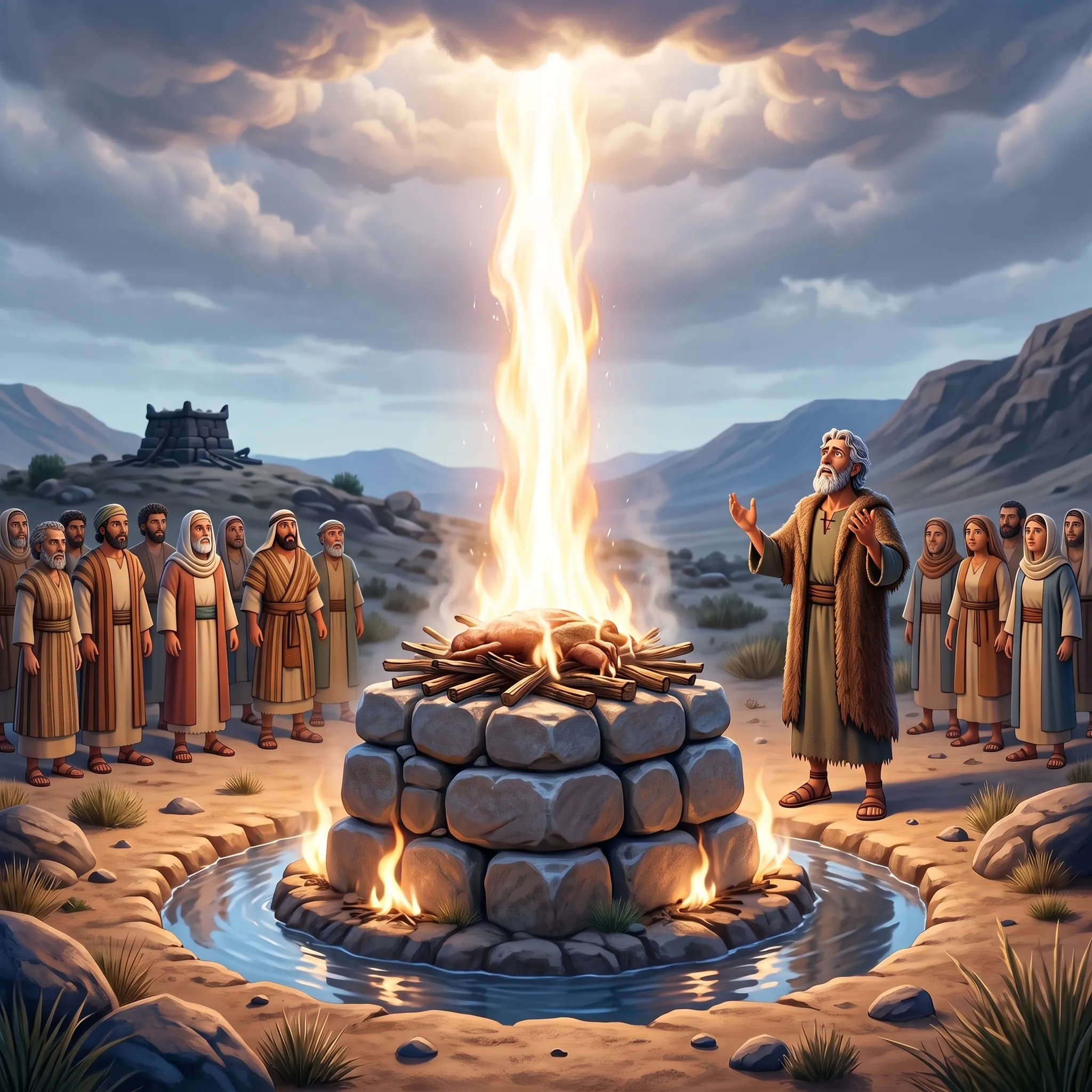
Elijah and the Prophets of Baal
After three years without rain, Elijah calls the whole nation and 450 prophets of Baal up Mount Carmel for a test. Two altars, two offerings, no fire allowed, and whichever god answers from heaven is the real God.
1 Kings 18, 11 min, ages 3-8
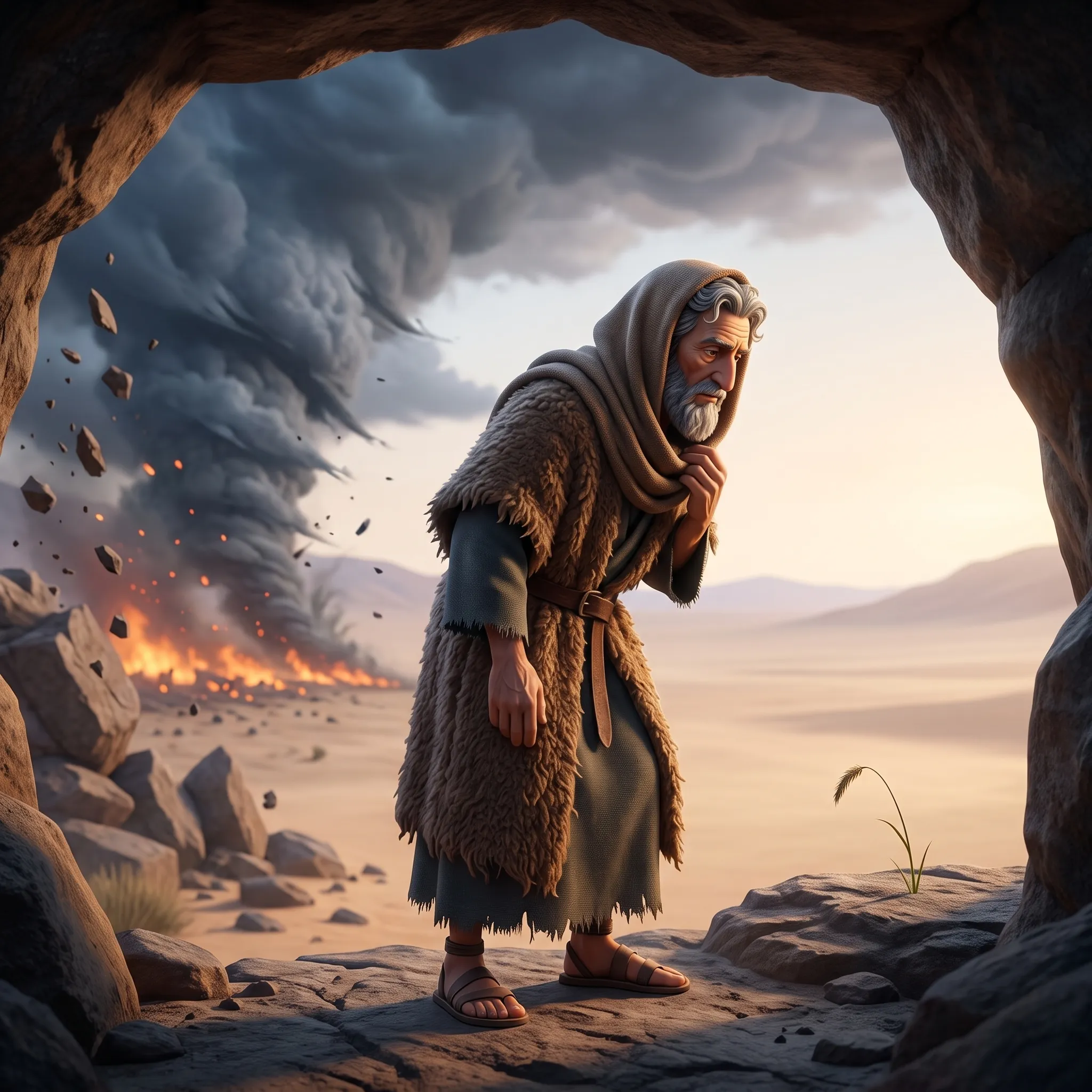
Elijah and the Still Small Voice
Just days after fire falls on Mount Carmel, the boldest prophet in Israel is running for his life and too tired to go on. What God does next is not what Elijah, or anyone, would expect.
1 Kings 19, 8 min, ages 5-8

Elijah and the Chariot of Fire
Elijah and his young friend Elisha walk one last road together, and both of them know it. Before the day ends, Elisha will ask for something no one can buy and see something he will never forget.
2 Kings 2:1-14, 5 min, ages 3-8
Listening through Elijah’s life
Elijah and the Ravens is three minutes beside a brook called Cherith, after Elijah has told King Ahab the rain will stop. Big scruffy black birds bring him bread and meat every morning and every evening, until one day the brook goes quiet. It is on our list for three-year-olds. Elijah and the Widow of Zarephath follows him to a town outside Israel, where a mother is gathering two sticks to bake the last handful of flour for herself and her thin, tired son. He asks her to feed him first, and the jar of flour and the jug of oil do not run out until the rain comes back. That one is eight minutes.
Elijah and the Prophets of Baal is the big one, eleven minutes on Mount Carmel after three years without rain. Four hundred and fifty prophets dance and shout at their altar from morning until evening while Elijah teases them. Then he rebuilds an old altar from twelve stones, has twelve jars of water poured over it, and prays once. The fire takes the offering, the wood, the stones and the water in the trench, and at the end a cloud no bigger than a man's hand brings the rain.
Elijah and the Still Small Voice is the turn. Queen Jezebel promises to kill him, he runs into the desert and asks God to take his life, and God answers with sleep, a cake baked on hot stones and a jar of water by his head. Later, on the mountain, God is not in the wind or the earthquake or the fire but in a gentle whisper. It runs about eight minutes. Elijah and the Chariot of Fire ends it in under five: a last walk with Elisha, the Jordan parted with a rolled-up cloak, a chariot and horses of fire, and the cloak left lying on the road for Elisha to pick up.
On this website Elijah and the Ravens, Elijah and the Prophets of Baal and Elijah and the Chariot of Fire are published in full. The widow and the still small voice carry their opening, with the rest of the narration in the app. Every page has a free audio preview, the memory verse from the World English Bible, discussion questions and a prayer.
Common questions
- Are the Elijah stories suitable for a three-year-old?
- Elijah and the Ravens is, and it is short enough for one. The others are written for ages 3 to 8 but suit four and up better. Mount Carmel runs eleven minutes, which is a lot of standing on a mountain for a three-year-old, and the widow and the still small voice both have someone saying out loud that they expect to die. Elijah and the Chariot of Fire is short and has no danger in it, but it is a goodbye.
- Is anything in them frightening, and did Elijah die?
- The hard moments are spoken rather than shown: the widow says she and her son will eat their last meal and die, and Elijah, worn out and afraid, asks God to take his life. Both pages carry a note for parents. As for the end, the Bible does not describe Elijah dying. A chariot of fire comes between him and Elisha and he goes up into heaven in a whirlwind, which the story points out it says of almost no one else except Enoch.
- Which order should we listen in?
- The order on this page, which is the Bible's. The stories lean on each other: the widow story remembers the ravens, the still small voice opens by remembering the fire on Carmel, and the chariot looks back over all of it. After the chariot, Elisha and the Widow's Oil carries straight on with the man who picked up the cloak.
- What does the Bible say about Elijah that these stories leave out?
- Several things. The widow's son falls ill and dies later in 1 Kings 17, and Elijah prays him back to life; our widow story stops before that. After the fire on Carmel, Elijah has the prophets of Baal taken down to the brook Kishon and killed, which our telling leaves out. Also missing are Elijah throwing his cloak over Elisha at the plough, the stolen vineyard of Naboth, and fire falling on the soldiers sent to arrest him in 2 Kings 1.
New stories
Other people in the Bible
Or browse by what you need
- Bedtime Bible stories
- Short Bible stories
- Bible stories for 3 year olds
- Bible stories for preschoolers
- Animal Bible stories
- Bible stories about brothers and sisters
- Bible stories about waiting
- Bible stories about courage
- Christmas Bible stories
- Easter Bible stories