Abraham Bible stories for kids
Abraham is the man who left. God told him to go, did not say where, and he went, at seventy-five years old, with everything he owned loaded onto donkeys and no address to give anyone who asked. Children take this in more easily than adults do. A child who has moved house, or is about to, recognizes the whole feeling immediately, and a child who has not still understands the idea of setting off before you know the way.
We have two Abraham stories and both are short, about eight minutes for the pair. One is about going and the other is about waiting, which between them account for most of his life. Neither has anything frightening in it. Sarah's two stories carry the other half of the same promise, so families often listen across both.
2 stories · about 8 minutes of audio
Abraham’s story, in order
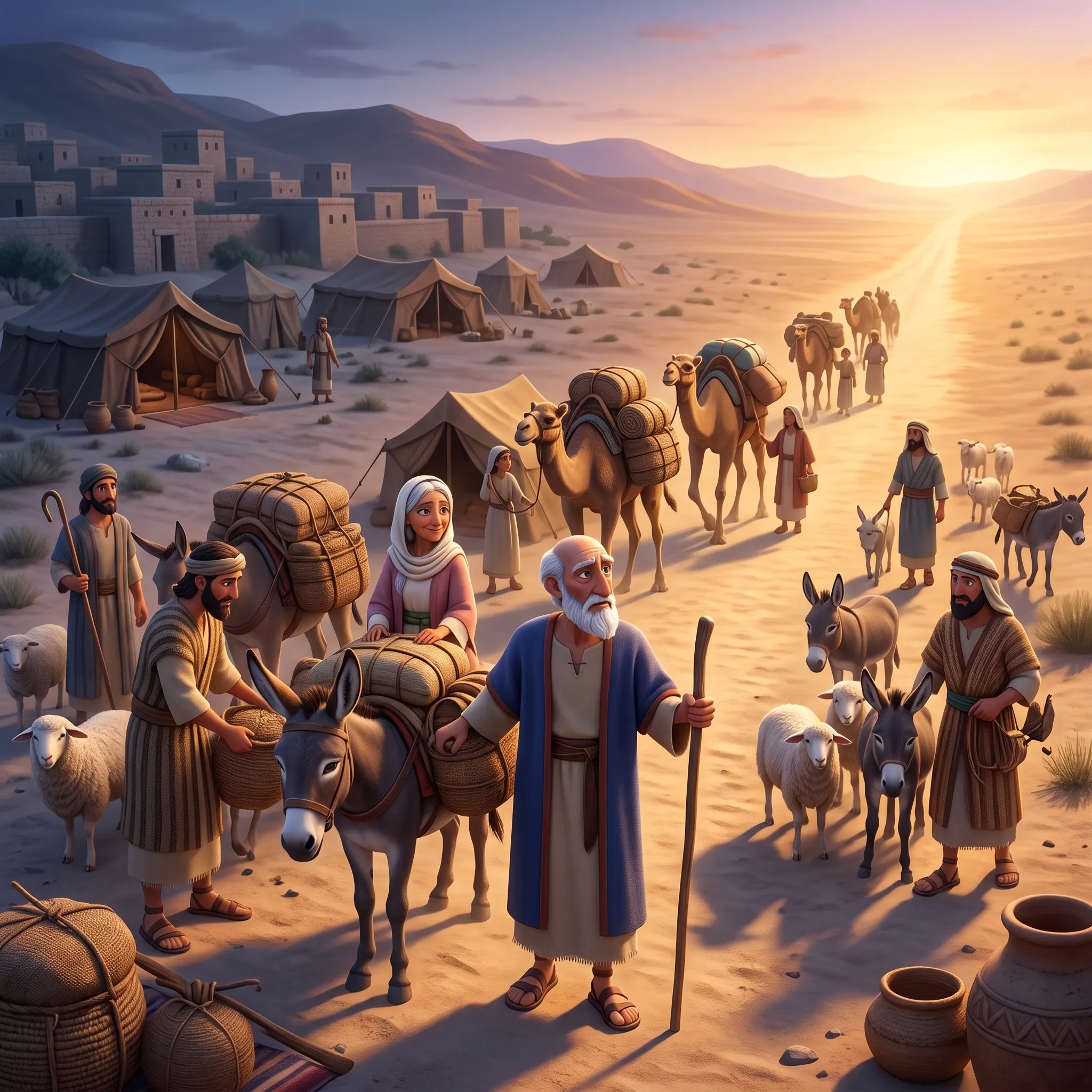
Genesis 12:1-9
God Calls Abraham
God asks Abram to leave everything he knows and walk toward a land God will not even name. This unhurried retelling follows the dust, the donkeys and the altars Abram builds wherever God speaks to him.
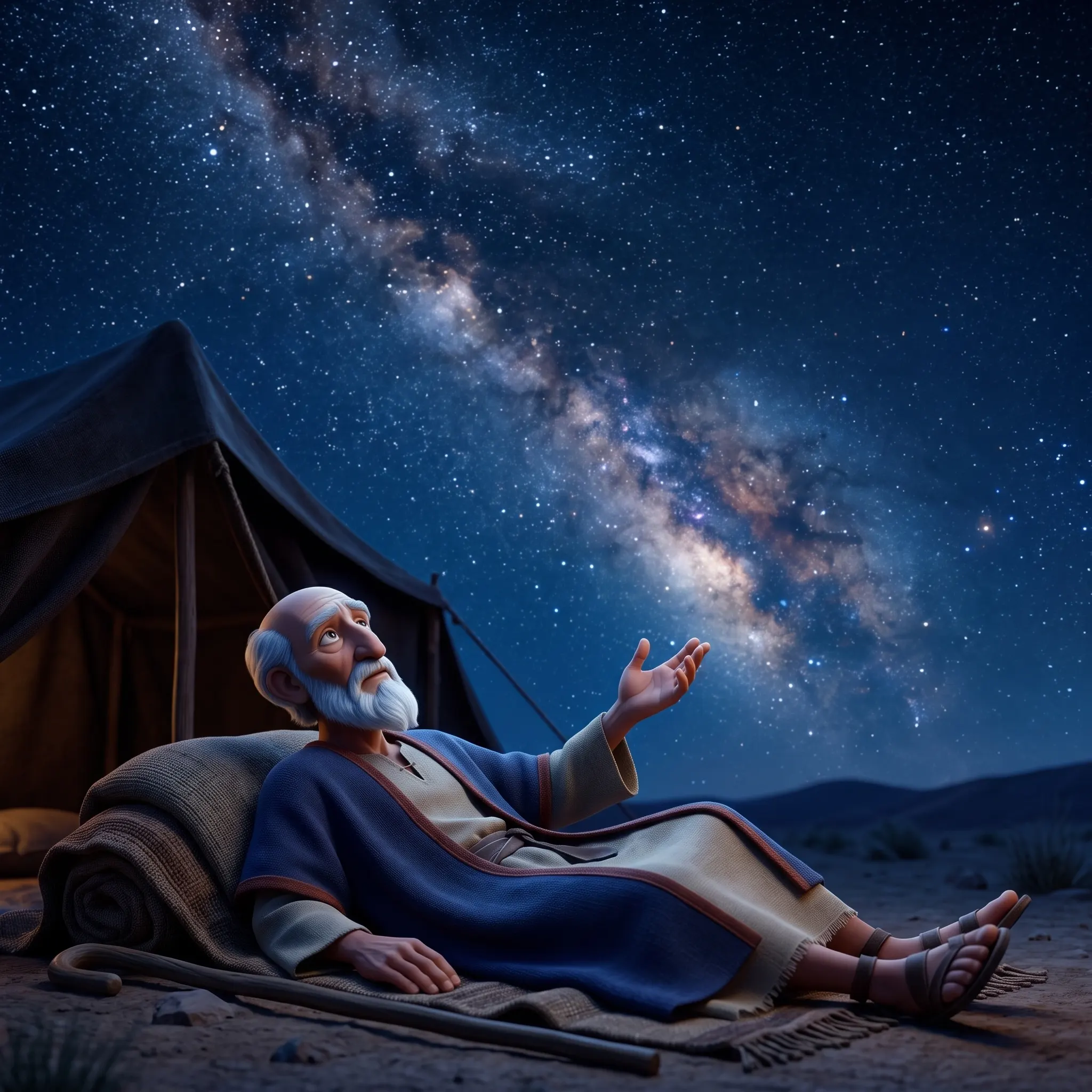
Genesis 15:1-6
Abraham Counts the Stars
Abram has been carrying the same question for years: God promised him a family, so where is the child? This quiet story takes him out of his tent and into a night sky that answers with far more than he asked for.
Listening through Abraham’s life
God Calls Abraham is the leaving, and it moves at walking pace on purpose. There is dust, there are animals, there is a road, and there is a man who genuinely cannot answer the obvious question about where all of this is heading. What he does instead, every time God speaks to him, is stack up stones and build an altar, so the journey ends up marked out behind him like footprints. Children almost always ask about the stones, which is a good sign that the story worked.
Abraham Counts the Stars is three minutes long and is the quietest thing we have published. Years have gone by, the promised family has not arrived, and Abraham says so out loud, to God, without softening it at all. God's reply is to walk him out of the tent and tell him to start counting stars, which is not an answer to the question he asked and is somehow far more than he asked for. It is the best story we have for a child who is old enough to be properly disappointed about something.
In order, the two make a small complete shape. God asks for trust before He gives any details, and then, years later and with nothing yet to show for it, meets an honest complaint by making the promise bigger rather than smaller. Nothing is resolved between them. The child is still not born when the second story ends, and that is deliberate, because it is exactly where Sarah's stories pick the thread up.
On this website, God Calls Abraham gives you its opening and keeps the rest of the narration for the app. Abraham Counts the Stars is published here in full, because at three minutes there would be nothing left worth reading if we cut it in half. Both pages carry the memory verse from the World English Bible, discussion questions, a short prayer and a free audio preview you can play straight away.
Common questions
- Where does Isaac's birth come in?
- Not in these two. The birth is told in Sarah Laughs and Isaac Is Born, which sits on Sarah's page, and it is the payoff for everything Abraham waits through here. If you are listening as a family arc, play Abraham's two stories first and Sarah's two after them.
- Is there anything hard in these stories?
- Very little. The only tender moment is Abraham grieving out loud that he and his wife have no child, which can land close to home in families touched by infertility or loss. The story never explains the years of waiting, and if your child asks why it took so long, it is honest to say that God did not explain them to Abraham either.
- Is the story of the mountain in Genesis 22 on the site?
- Yes, as Abraham and Isaac on the Mountain, which we file under Isaac rather than Abraham, so you will find it in the full story list instead of on this page. It is the hardest story in this part of Genesis, the website carries only its opening, and it suits the older end of the 3 to 8 band with a parent listening alongside.
- Is eight minutes enough for a bedtime?
- The pair together is roughly one bedtime, and either story also works on its own. Abraham Counts the Stars, at three minutes, is one of the shortest we have published, which makes it genuinely useful on a night when everything else has already taken far too long.