
Esther Bible stories for kids
Esther is the girl with two names. She is Hadassah, an orphan raised by her cousin Mordecai, who becomes queen of Persia and keeps her family's story a secret until the day staying quiet would cost her people their lives. Children remember the walk: down the long hall to a king who has not sent for her, not knowing whether he will hold out his golden scepter. It is the clearest picture the Bible gives a small child of being scared and doing the right thing anyway.
We have two Esther stories, both on this site in full text, both told for ages 3 to 8, and about seventeen minutes for the pair. The first is the famous one and the second is what happened next, which most children's Bibles leave out. Played together they make one complete rescue, from the secret to the feast.
2 stories, about 17 minutes of listening
Esther’s story, in order

Queen Esther Saves Her People
Esther has two names, a hidden family story, and a place inside the royal palace. When her people face danger, she must decide whether courage means speaking at exactly the right moment.
Esther 2-7, 11 min, ages 3-8
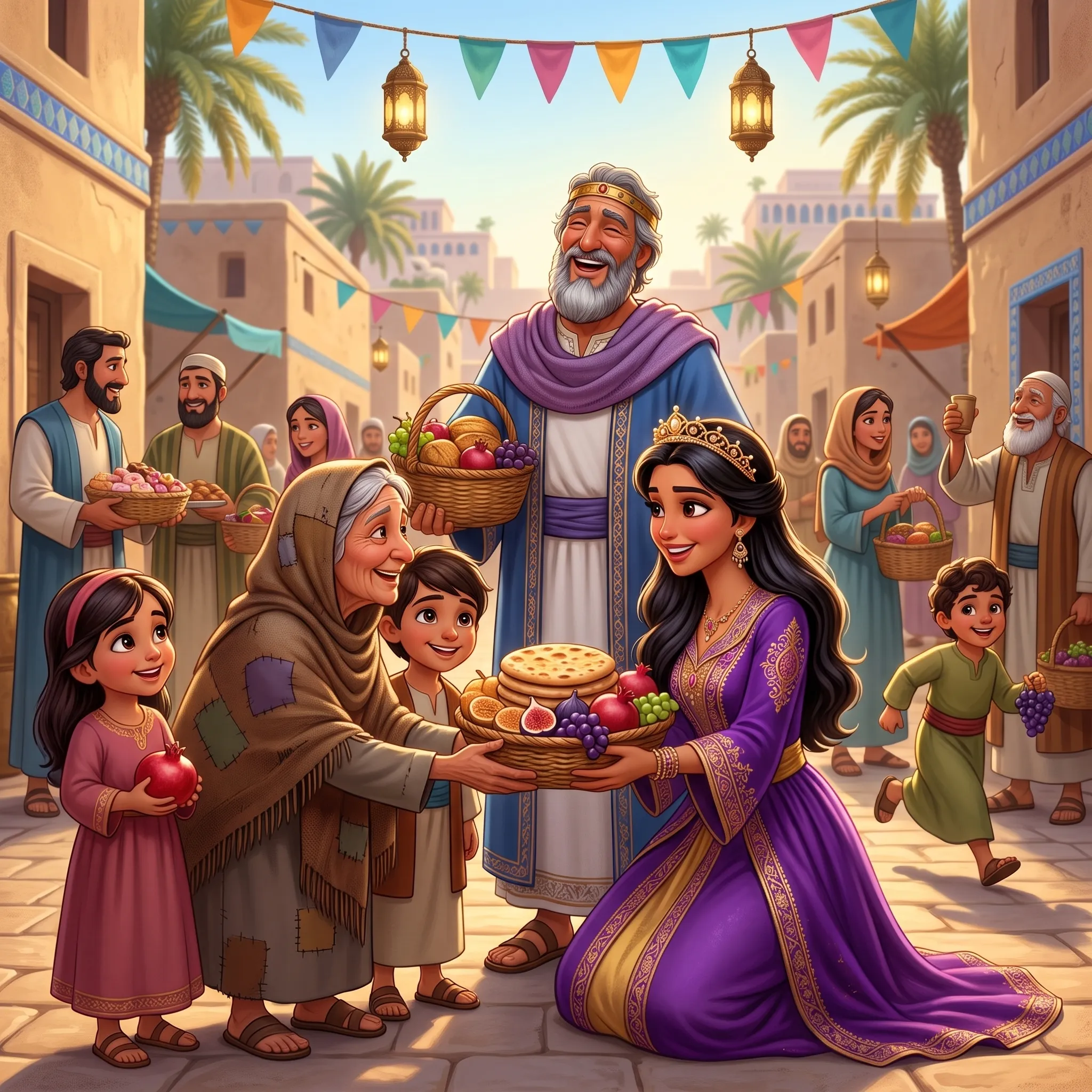
Esther and the First Purim
Haman is gone, but his cruel letter is still out there, and not even the king can take it back. Esther and Mordecai must find another way, with busy scribes, a royal ring and very fast horses.
Esther 8-9, 6 min, ages 3-8
Listening through Esther’s life
Queen Esther, from Esther 2 to 7, is about eleven minutes and is the fuller evening story. Hadassah becomes Queen Esther, proud Haman talks the king into a plan against Mordecai's people, and Mordecai sends the message with the book's most famous line: maybe she became queen for such a time as this. Esther fasts for three days, puts on her royal robes and walks in uninvited. Two banquets and one sleepless king later, she tells the truth about who she is and points straight at Haman.
Sorrow Turned to Joy, from Esther 8 and 9, is about six minutes and starts the moment Haman is gone. His letter is still out there, sealed with the king's ring, and not even the king can take it back. So Esther goes to the king a second time, in tears, and he lets her and Mordecai send a second letter after the first. Scribes write it in the language of every people in 127 provinces, riders gallop it down every road, and the same roads that carried the bad news now carry the opposite.
It ends with the first Purim: feasting, food sent to neighbors, gifts for the poor, and a name taken from Haman's own lot, the little thing he threw to pick his day. It suits a child who already knows the first story and wants to know whether everything really turned out all right, and it is an easy way in if your child has heard about Purim from a Jewish friend or classmate.
Both pages carry the memory verse from the World English Bible, discussion questions, a short prayer, a note for parents and a free audio preview you can play straight away.
Common questions
- Is Haman too frightening for a young child?
- Usually not. He is the villain of both stories, proud and cold, and his plan to hurt a whole people is said plainly but without detail. Queen Esther softens his end to being sent far away and never coming back. Most children hear the pair as a rescue rather than a threat, and it helps to keep the focus there: Esther was scared, she told the truth anyway, and everyone she loved was safe.
- What happens on the day itself in the Purim story?
- In Esther 9, Esther's people fight those who come to destroy them and many die, Haman's ten sons among them. Sorrow Turned to Joy covers that day in one line, that no one could withstand them, and moves straight on to rest and feasting. If an older child asks, you can say Esther's people were allowed to protect themselves from people who meant to hurt them, and that the holiday remembers the rescue with food and gifts, not the fighting.
- Which order should we listen in?
- Queen Esther first, then Sorrow Turned to Joy. The second story opens by reminding your child of the first, the brave walk, the night the king could not sleep and the second banquet, so it works on its own, but it lands much better straight after.
- Is this the same Purim that Jewish families keep today?
- Yes. The story ends by saying that Jewish families still keep Purim every year: they feast, send food to friends, give gifts to people who are poor and read Esther's story aloud, just as Mordecai's and Esther's letters asked. It is told as the end of the Bible story rather than as a lesson about the holiday.
New stories



Other people in the Bible
Or browse by what you need
- Bedtime Bible stories
- Short Bible stories
- Bible stories for 3 year olds
- Bible stories for preschoolers
- Animal Bible stories
- Bible stories about brothers and sisters
- Bible stories about waiting
- Bible stories about courage
- Christmas Bible stories
- Easter Bible stories