
Easter Bible stories for kids, from Palm Sunday to the risen Jesus
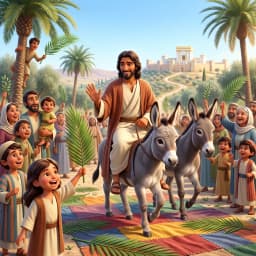 Palm Sunday 6 min
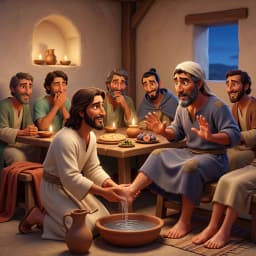 Jesus Washes the Disciples' Feet 6 min
 The Resurrection of Jesus 6 min
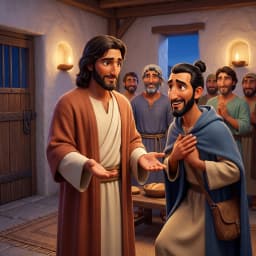 Doubting Thomas 5 min
The Easter story as the Gospels tell it, one evening at a time. Jesus rides into Jerusalem on a borrowed colt that nobody has ever sat on, over a road of cloaks and branches, while the crowd shouts hosanna. At supper a few days later he ties a towel around his waist and washes his friends' dusty feet. Very early on Sunday morning, Mary Magdalene and the other Mary walk to the tomb wondering who will move the stone, and find an angel sitting on it. That evening Jesus stands among his frightened friends behind locked doors, and a week later Thomas, who missed it, gets to see for himself.
They are told in order and meant to be heard that way, each one picking up where the last left off. Palm Sunday ends with the shouting over and a quiet promise: a sad week is coming, but after it the happiest morning there has ever been. Jesus Washes the Disciples' Feet begins a few days after the hosannas. The Resurrection of Jesus opens by remembering the colt, and Doubting Thomas begins on the evening of that same Sunday. Played across Holy Week and the Sunday after, they walk your child through Easter.
They run from about five minutes to just over six, and all are told for ages 3 to 8. Jesus Washes the Disciples' Feet is calm enough for a three-year-old. Palm Sunday is the loudest and the happiest, and The Resurrection of Jesus and Doubting Thomas are the two with a note for parents.
4 stories, each free to preview
Every story in this collection
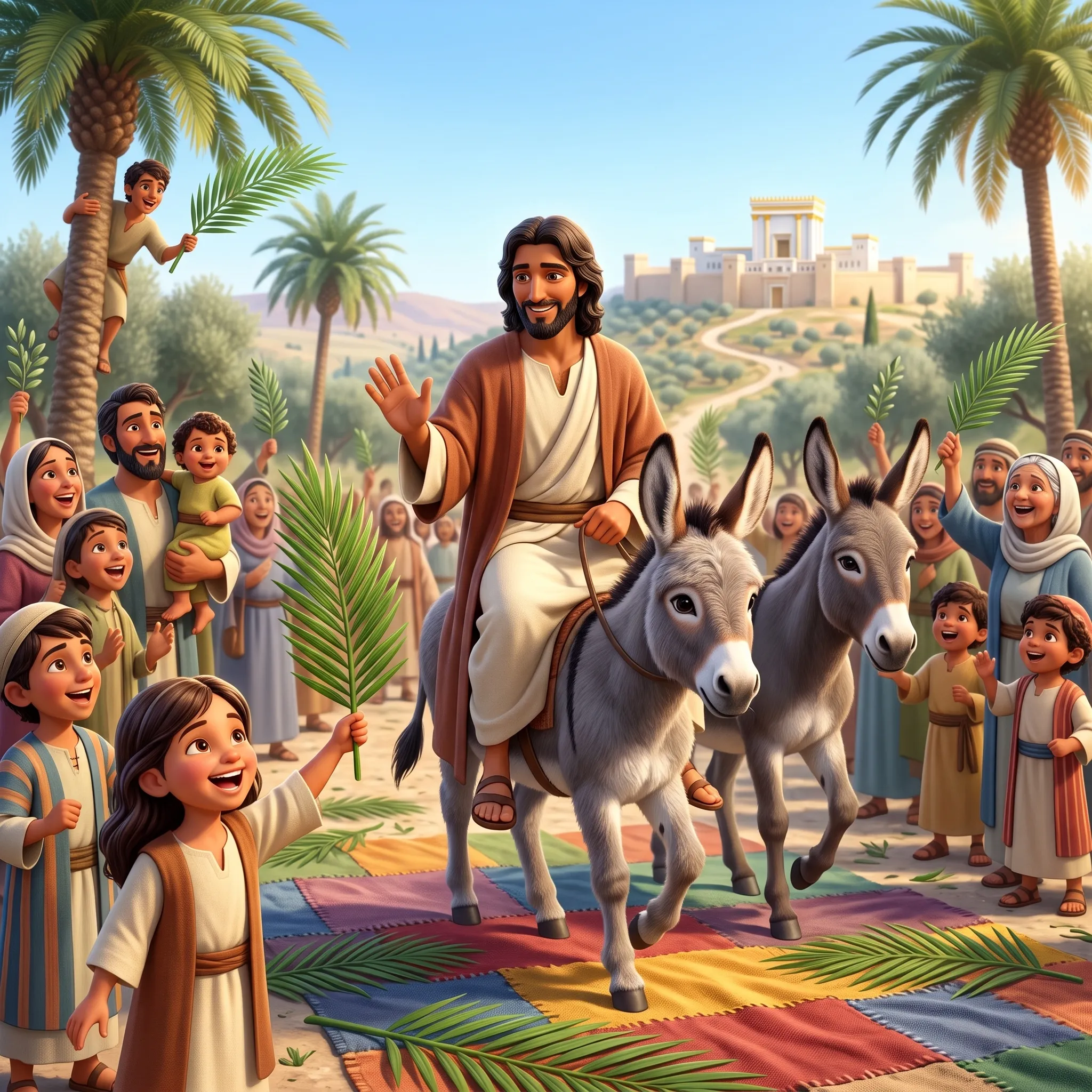
Palm Sunday
Just before the Passover feast, Jesus and his friends climb the long, steep road up to Jerusalem, and near the Mount of Olives he sends two of them ahead with very exact instructions. They are to look for something tied up in the next village, and if anyone asks why, they only need to say four words.
Matthew 21:1-11 (with Mark 11:1-11; Luke 19:28-40; John 12:12-18; Zechariah 9:9), 6 min, ages 3-8
Jesus Washes the Disciples' Feet
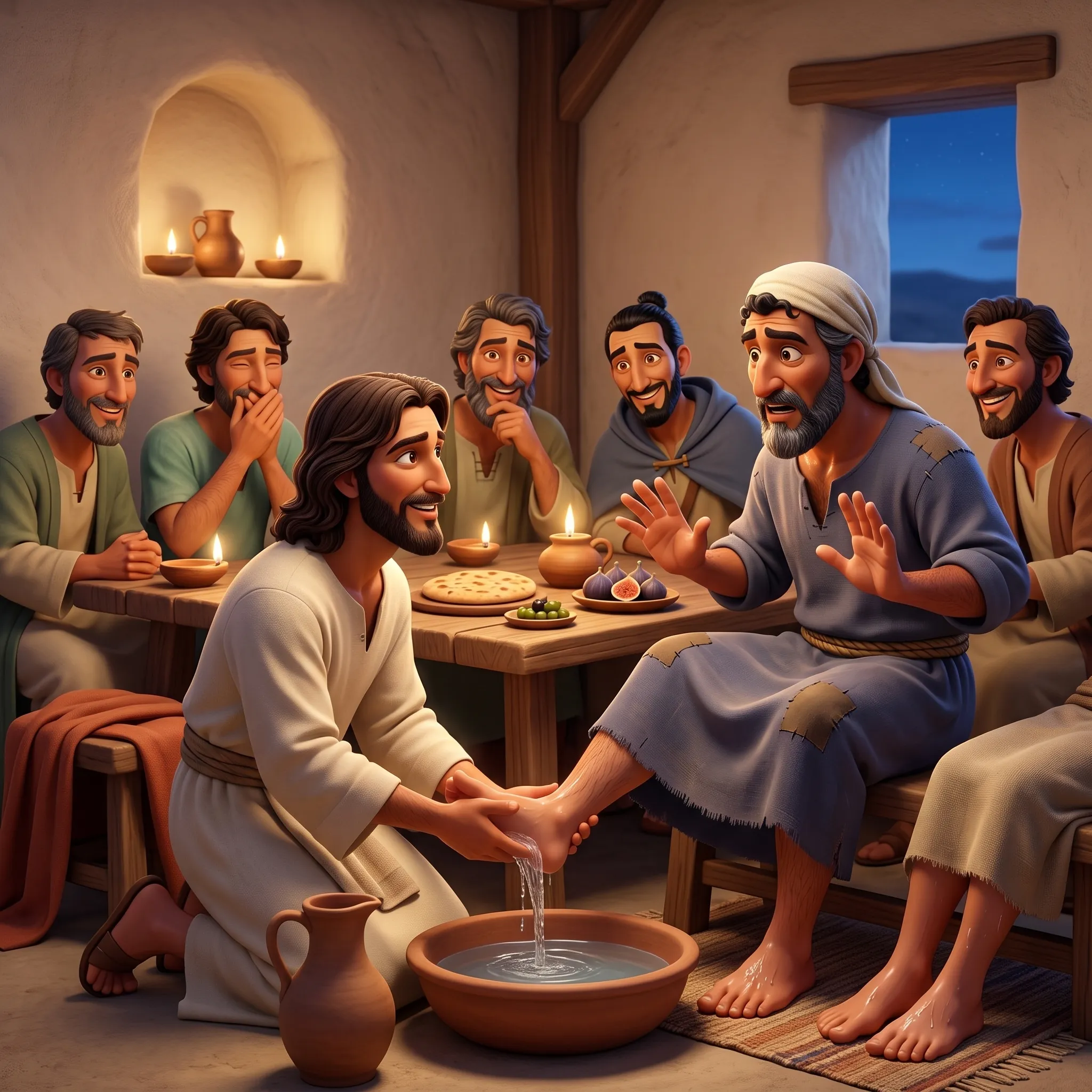
At supper one spring evening in Jerusalem, Jesus gets up from the table, ties a towel around his waist and pours water into a basin. His friends' feet are dusty from the road, and Peter is not at all sure about what happens next.
John 13:1-15, 33-35, 6 min, ages 3-8

The Resurrection of Jesus
Very early on the first day of the week, as the sky is just getting light, two friends who are both called Mary walk to a garden carrying sweet-smelling spices. All along the path they talk over one problem: the stone across the door is much, much too big for them.
Matthew 28:1-10 (with Matthew 27:55-61; Mark 16:1-4; Luke 23:55-56; Luke 24:1; John 19:41), 6 min, ages 3-8
Doubting Thomas
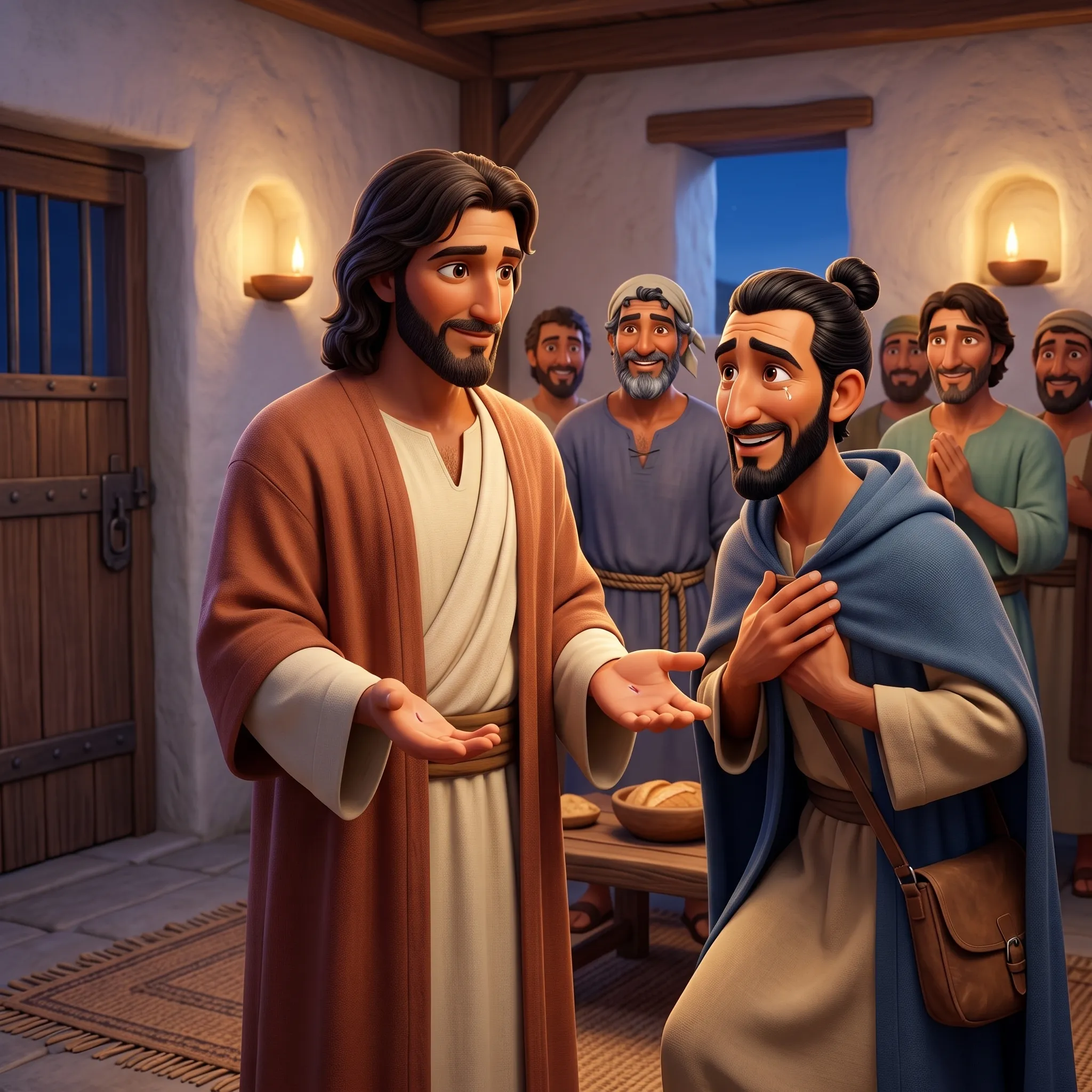
On the evening of the first Easter day, Jesus's friends sit behind locked doors, afraid, and suddenly Jesus is standing right in the middle of the room. But one friend, the one people call the Twin, has missed it all, and he says he cannot believe until he sees for himself.
John 20:19-29, 5 min, ages 3-8
How to use these at home
None of these stories tells the cross. Between the supper and Sunday morning there is no arrest, no trial and no crucifixion scene. The Resurrection of Jesus opens with a few quiet sentences: Jesus died on a cross, he knew it was coming and did not run away, he gave his life because he loves us, and his friends were very sad. It says nothing about how. If your child asks, you can keep it that simple too and go with them straight on to the empty tomb, because that is where the story is going.
Doubting Thomas is the other place a question may come. Jesus shows his friends his hands and his side, and the story explains the marks the way you might to a small child: a scar is where a hurt used to be, and the hurt is over for good. The Bible never says Thomas touched them, and neither does our telling. What he does is say my Lord and my God, and Jesus answers with a blessing for everyone who believes without seeing, which the story hands straight to your child.
Jesus Washes the Disciples' Feet gives children one concrete thing to do with Easter. The most important person in the room gets down on the floor with a towel and a basin, Peter says never, then asks for his hands and his head as well, and Jesus tells his friends to love one another just as he has loved them. Ask your child the next day who they could do a small, unglamorous kind thing for. It is the new commandment in a form a four-year-old can carry out before lunch.
Each story page carries a memory verse from the World English Bible, discussion questions and a short prayer, which makes the set easy to use across Holy Week, in a Sunday school group or on Easter morning itself. Every one has its full text published here and a free audio preview, and the complete narration is in the Bible Wonders app. The Resurrection of Jesus ends with the old Easter greeting, he is risen, he is risen indeed, which is a lovely thing to say to each other at breakfast.
Common questions
- Which order should we listen to the Easter stories in?
- The order on this page: Palm Sunday, the supper where Jesus washes his friends' feet, the empty tomb on Sunday morning, then Thomas. That follows the week itself, so you can play Palm Sunday on Palm Sunday, the foot washing on the Thursday before Easter, The Resurrection of Jesus on Easter Day and Doubting Thomas on the Sunday after, when many churches read that passage. If you only have one night, The Resurrection of Jesus works on its own.
- Do these stories describe the crucifixion?
- No. The Resurrection of Jesus says in one gentle passage that Jesus died on a cross, that he gave his life because he loves us, and that his friends were very sad. Doubting Thomas mentions the scars from the cross, explained as the place where a hurt used to be. Neither describes how he died, and both story pages have a parent note on what to say if your child asks.
- Who found the empty tomb?
- Women who had followed Jesus, very early on the Sunday morning. Our telling follows Matthew, who names Mary Magdalene and the other Mary, the mother of James and Joses. Mark adds Salome, Luke adds Joanna and other women, and John tells it from Mary Magdalene's side. All of them agree that it was women who came to the tomb first and found it empty.
- Are these Easter stories suitable for a three-year-old?
- Most of them. Jesus Washes the Disciples' Feet is on our list for three-year-olds: a towel, a basin and a lot of dusty feet. Palm Sunday is noisy and happy, with a little colt at the center of it. The Resurrection of Jesus and Doubting Thomas are joyful but carry the cross and the scars, so they are the ones to read about first, and both story pages have a note for parents.
- What comes before the Easter stories?
- Jesus Raises Lazarus, in Bethany just outside Jerusalem. Palm Sunday mentions the people who saw Lazarus walk out of the tomb and could not stop telling everyone, and it ends with Jesus going back to Bethany for the night. Before that come the Christmas stories, his baptism, the wedding at Cana, the days beside the Sea of Galilee and the stories he told. You will find them all in order under Jesus, in the Characters section of the site menu.
Browse another collection
- Bedtime Bible stories
- Short Bible stories
- Bible stories for 3 year olds
- Bible stories for preschoolers
- Animal Bible stories
- Bible stories about brothers and sisters
- Bible stories about waiting
- Bible stories about courage
- Christmas Bible stories