Bible stories about brothers and sisters, jealousy and all
Four stories about brothers and sisters, and the Bible does not tidy any of them up. Two brothers bring their gifts and only one is welcomed. Twins fall out over a bowl of stew and a blessing. A father gives one son a beautiful coat and the other brothers stop being able to say a kind word to him.
The fourth is the counterweight. In Baby Moses in a Basket, the sister is the one who saves the day, following the basket along the riverbank and stepping forward at exactly the right moment.
Children believe these stories because they recognize the feelings in them. Jealousy is not treated as a small thing here, and nobody in the telling explains it away or hurries a brother into saying sorry.
6 stories, free to preview
Every story in this collection
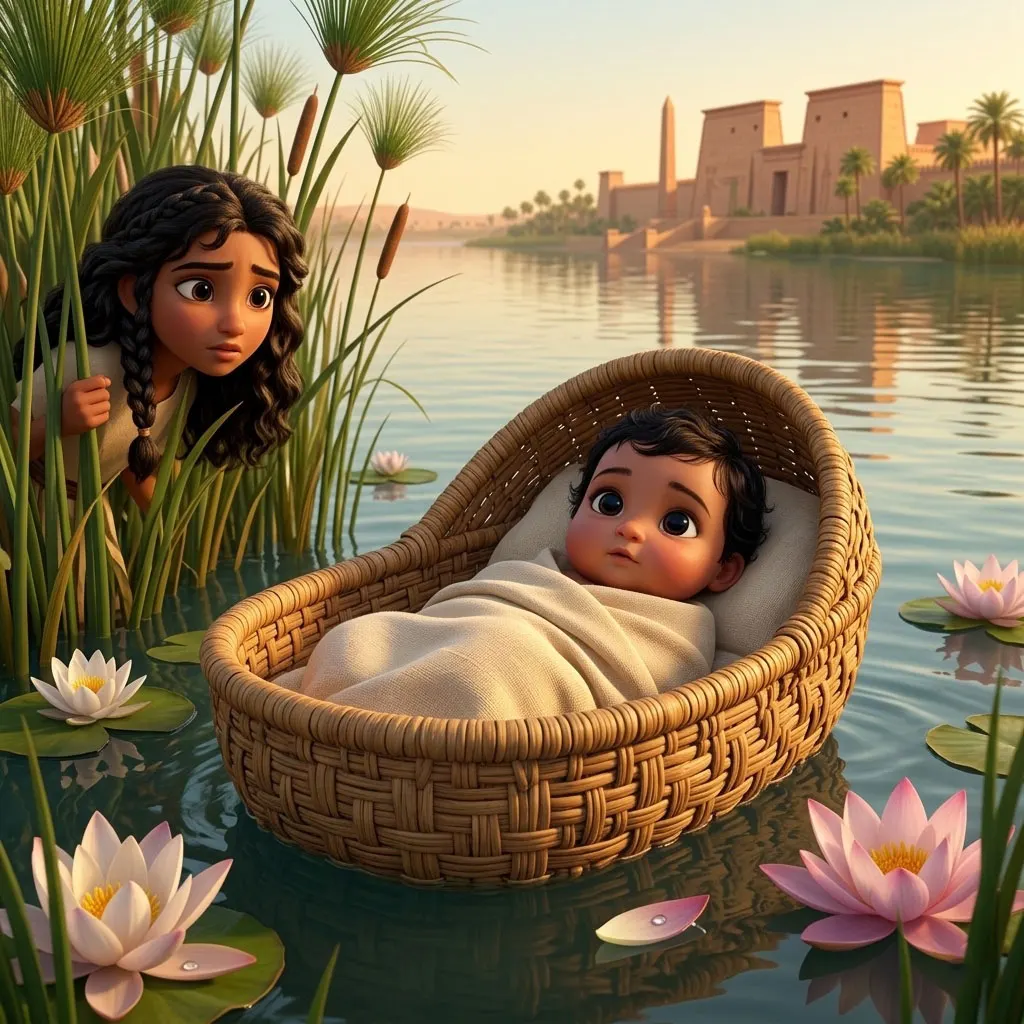
Exodus 1-2
Baby Moses in a Basket
A tiny basket floats among the river reeds while a brave big sister watches nearby. This tender Baby Moses story follows a mother's careful plan and the unexpected kindness that keeps her little boy safe.
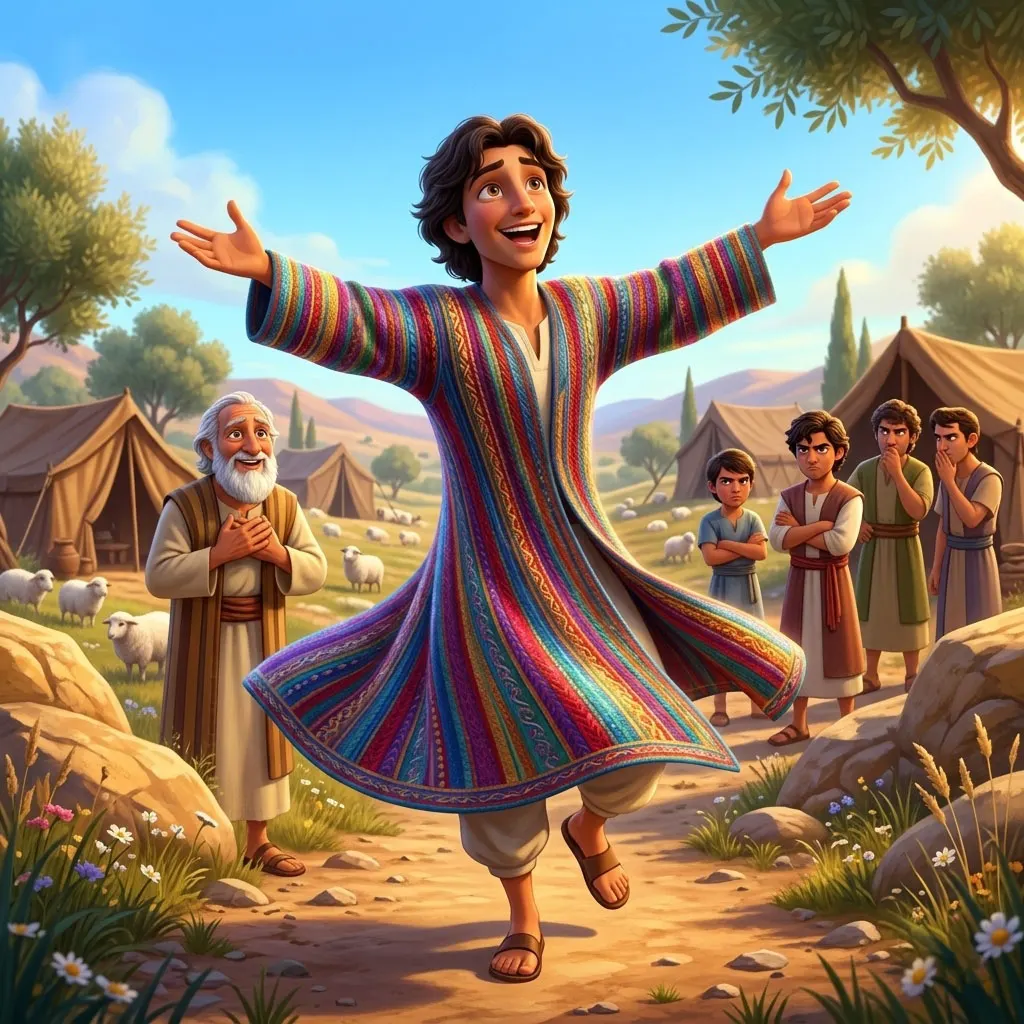
Genesis 37:1-11
Joseph and the Coat of Many Colors
Joseph receives a bright, beautiful coat—and discovers that a special gift can stir up very complicated feelings in a family. The story gently introduces dreams, jealousy, and the beginning of Joseph's long journey.
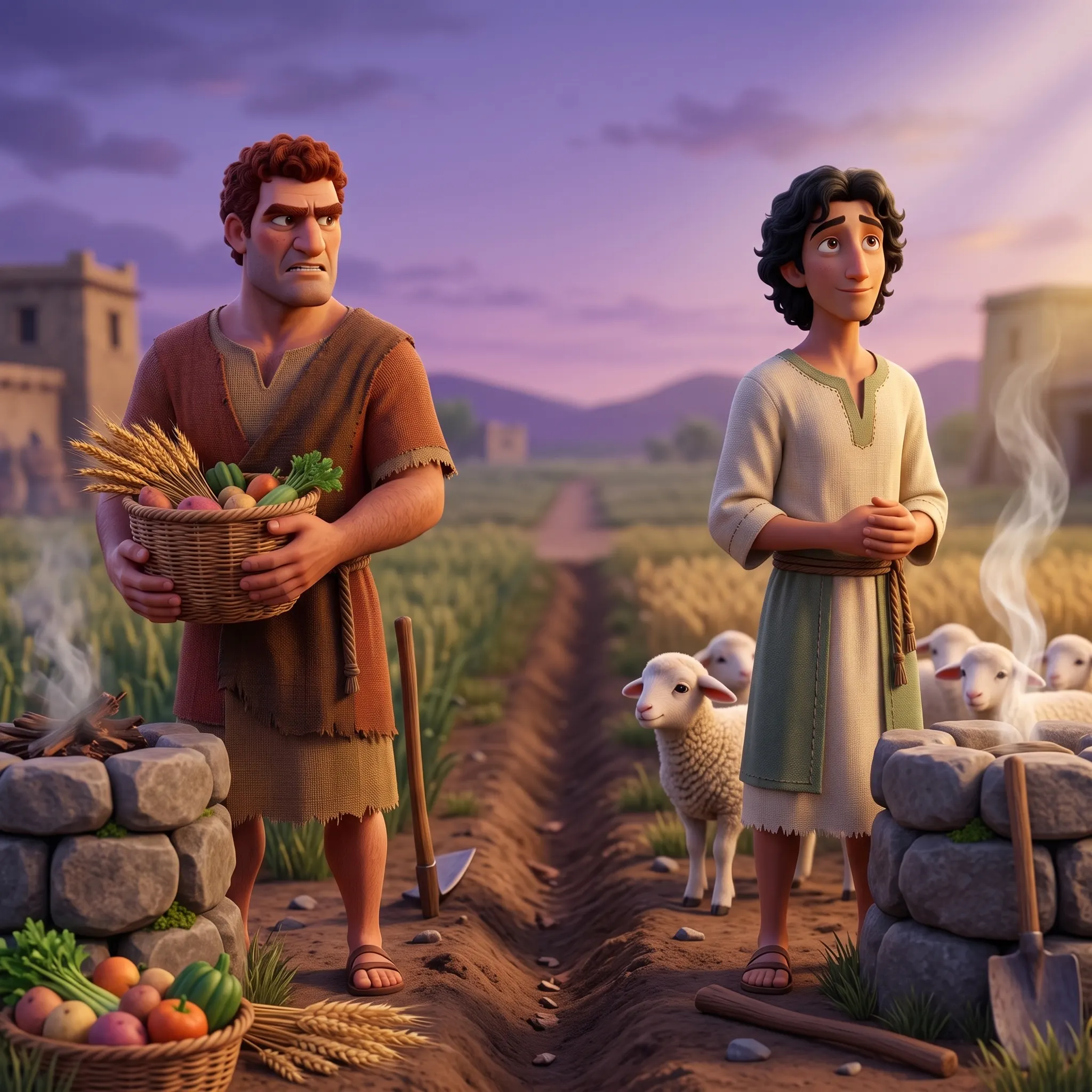
Genesis 4
Cain and Abel
Two brothers bring their gifts to God, and only one of them is welcomed — and the anger that follows changes everything. This is one of the Bible's hardest stories, told gently, and it ends somewhere most people do not expect.
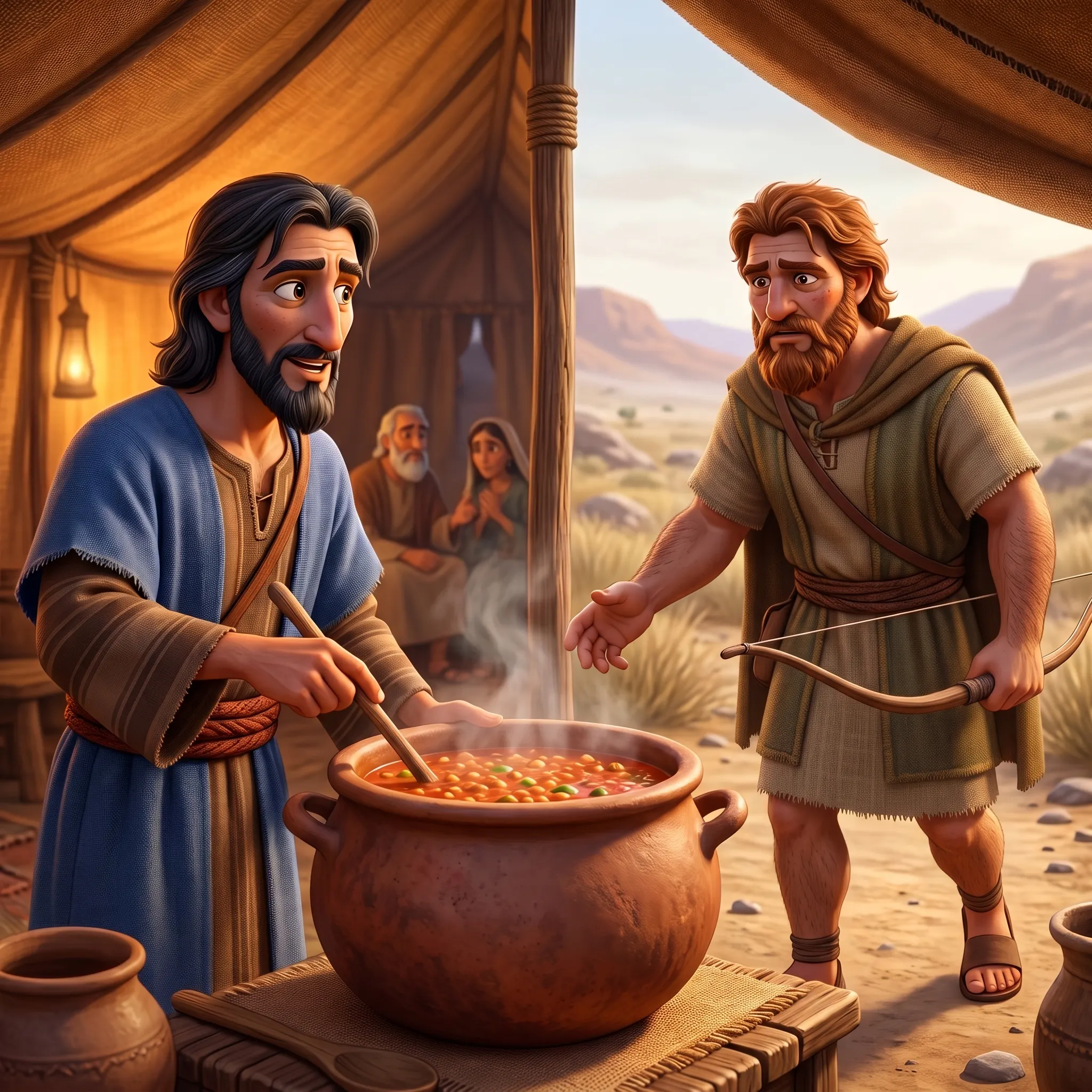
Genesis 25-27
Jacob and Esau
Twin brothers, one pot of lentil stew, and a bargain struck in the time it takes to draw a breath. This retelling follows Jacob and Esau from the day they were born to the morning one of them walks into his blind father's tent pretending to be the other.
Genesis 33
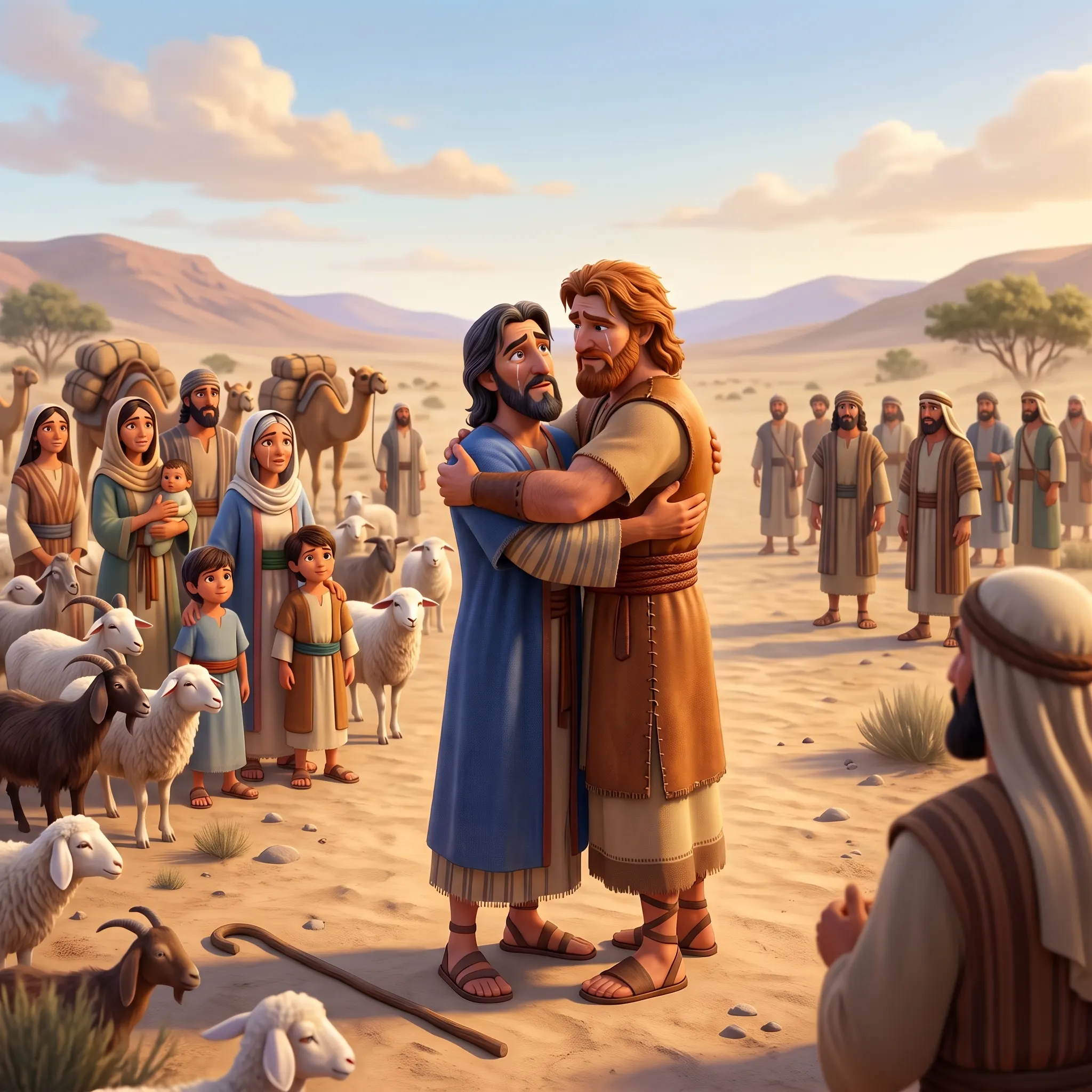
Jacob and Esau Meet Again
Twenty years after Jacob ran away, he is walking back — with a limp that will not let him run, and a dust cloud on the horizon that turns out to be four hundred men. This retelling stays beside him for the whole frightened walk toward a brother he wronged and has not seen since.
Genesis 42-45; 50:20
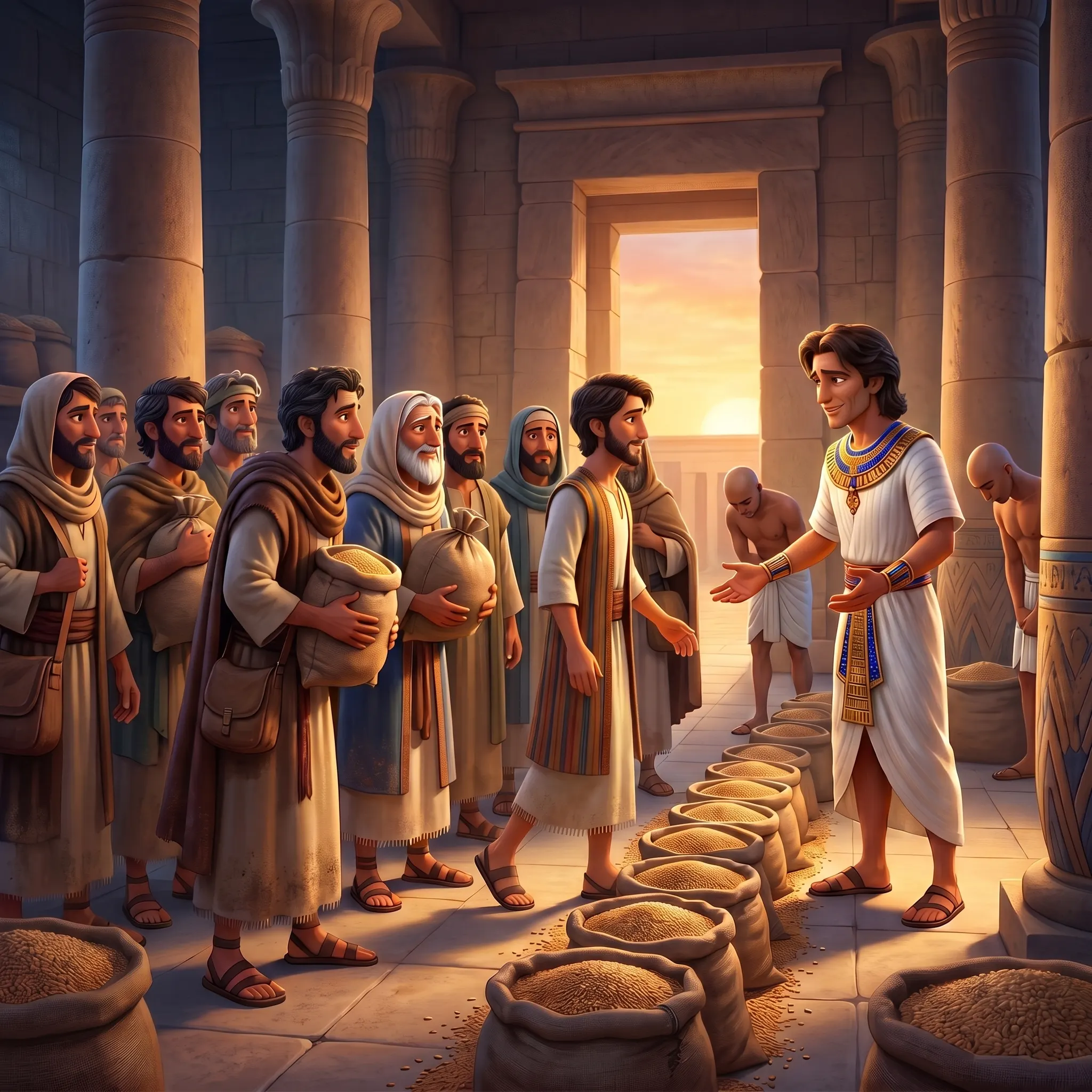
Joseph Forgives His Brothers
A famine empties the bowls in Jacob's tent, so ten brothers walk to Egypt to buy grain from a ruler they do not recognise. He knows exactly who they are — and before he says a word about it, he sets them a test to find out whether they have changed.
How to use these at home
Resist the urge to play one of these ten minutes after a fight. Children are quick, and a story delivered as a rebuke stops being a story. If the afternoon has gone badly, wait a day or two. The stories keep, and they work far better when nobody in the room is being got at.
The discussion questions are the real tool on these four pages, more so than on any others. Joseph and the Coat of Many Colors asks what makes the coat so special, which almost always turns into your child telling you about something a sibling got that they did not. Jacob and Esau asks about a bargain made in the time it takes to draw breath. You will learn more from the answers than your child learns from the questions.
Be ready to say plainly that people in these stories do wrong things. Jacob lies to his blind father, and his mother helps him plan it. Children hear that as clever unless an adult says otherwise, so say otherwise. The story pages carry a note for parents on all three of the difficult ones, with a sentence or two you can borrow.
The four sit at different ages. Cain and Abel is three minutes but the hardest story we tell. Baby Moses in a Basket is five minutes and suits four and up. Joseph and the Coat of Many Colors is six. Jacob and Esau is ten and needs a child old enough to follow a deception. Three of the four have their full text on this site, and all four have a free audio preview.
Common questions
- Is Cain and Abel too much for a young child?
- For a three-year-old, yes. Abel is killed by his brother, and our telling names it plainly without describing it. What makes it worth keeping for a five or six-year-old is where it ends, with God protecting Cain rather than abandoning him, so mercy is the last thing your child hears. The parent note on that page walks you through it.
- Can I play one of these after my children have been fighting?
- You can, but not as a lesson. Children spot the setup instantly and dig in. The better use is on an ordinary calm evening, when nobody is in trouble and your child can afford to notice that Joseph's brothers felt exactly what they felt last Tuesday.
- Is there a story where siblings actually get on?
- Baby Moses in a Basket. Miriam hides in the reeds watching her baby brother float away, then walks up to the Egyptian princess and arranges for her own mother to nurse him. It is the only one of the four where the sibling is the hero, and it is the one to reach for when you want an older child to feel useful rather than displaced.
- My oldest feels pushed out since the new baby arrived. Which story helps?
- Joseph and the Coat of Many Colors, though from the other side. The brothers watch their father hand one child something they did not get, and the story takes their feelings completely seriously before it goes anywhere else. Follow it with Baby Moses in a Basket so an older sibling gets to be Miriam for a bit.
- Why are there only four sibling stories?
- Because these are the four in our catalog where the brother or sister relationship is genuinely the engine of the story rather than background detail. We would rather have four that earn their place than pad the collection with stories that happen to mention a brother.