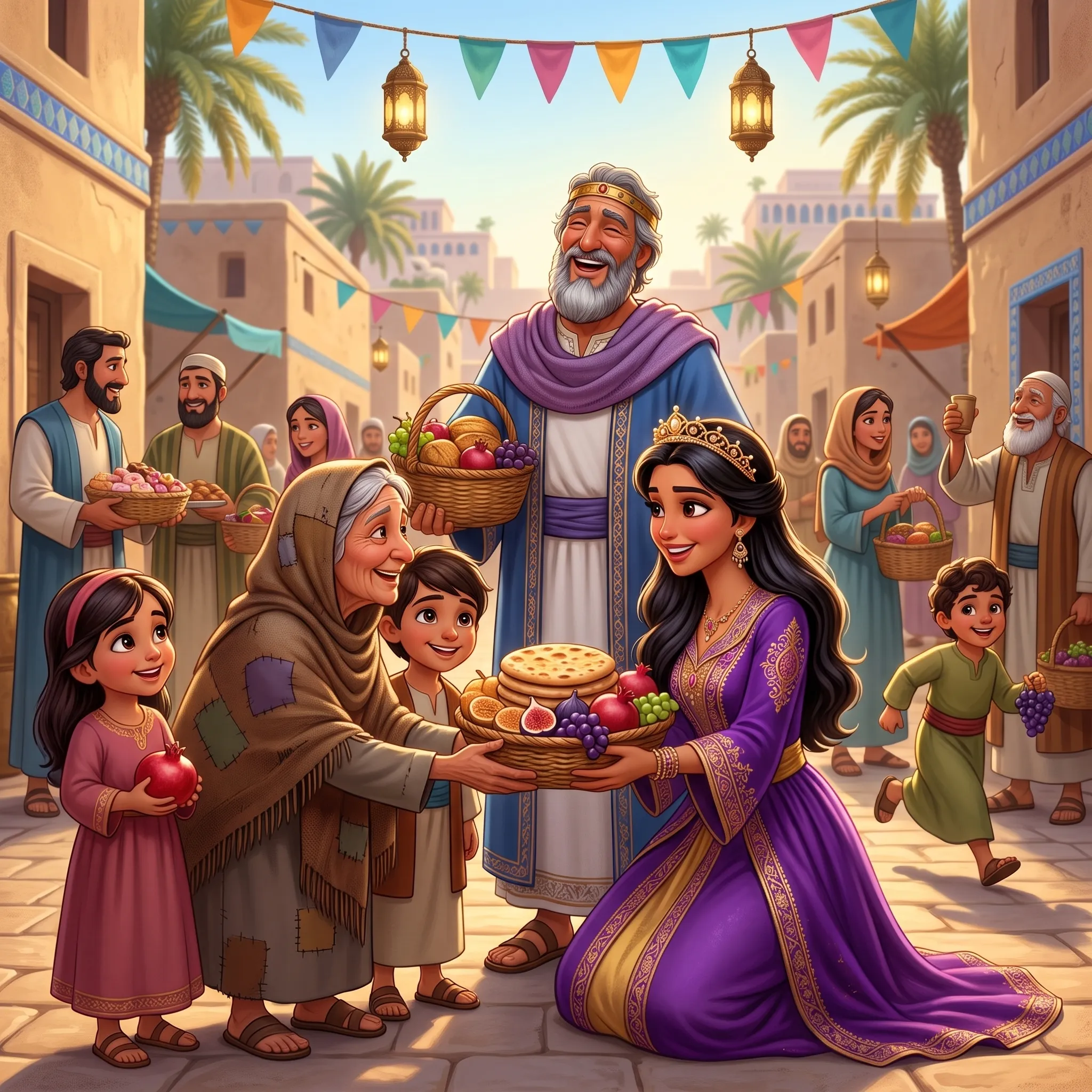
Esther and the First Purim Bible story for kids
Esther, Mordecai and the Very First Purim. A gentle, age-appropriate audio retelling for calm family listening and bedtime.
Esther 8-9. A 6-minute story for ages 3-8, about 8 minutes to read aloud.
Free audio preview
Hear the first two minutes of the narration, free and with no sign-up.
0:00 / 2:00

Keep listening in the app
Hear all 6 minutes with a subscription, which opens all 106. 6 stories are free, with offline listening and bedtime mode.
A little setup, without giving away the story
Haman is gone, but his cruel letter is still out there, and not even the king can take it back. Esther and Mordecai must find another way, with busy scribes, a royal ring and very fast horses.
Listen for these moments
- 1Why the king cannot simply cancel Haman's letter
- 2Four words to count on your fingers
- 3Where the name of the happy days comes from
A note for grown-ups
In Esther 9 the Jews fight the people who come to destroy them and many die, including Haman's ten sons; this telling covers that day in one line, "no one could withstand them," and moves straight on to rest and feasting. If an older child asks what happened, you can say Esther's people were allowed to protect themselves from those who meant to hurt them, and that the holiday remembers the rescue with food and gifts, not the fighting.
Esther and the First Purim
The whole story: Esther 8-9, retold for ages 3-8, about 8 minutes to read aloud
Haman was gone.
But his letter wasn't.
You may remember Queen Esther, and her brave walk down the long hall to the king. You may remember the night the king couldn't sleep, and the parade for her cousin Mordecai. And at her second feast, Esther told the king the truth, and proud Haman's plan was found out.
Esther's people were saved. But how? That is tonight's story.
Before all that, Haman had sent out a terrible letter, a plan to hurt all of Esther's people on one single day. It was written in the king's name and sealed with the king's own ring. And the Bible says a letter like that "may not be reversed by any man."
Not by anybody. Not even by the king.
That same day, the king gave Queen Esther Haman's house. Esther told him that Mordecai was her cousin, who had brought her up. Then the king took off his ring, the one he had taken back from Haman, and gave it to Mordecai.
But Esther could not rest. Not while that letter was still out there.
So she spoke to the king again. She fell down at his feet, and she cried, and she begged him to stop Haman's plan.
And the king held out his golden scepter to her. Esther stood up before him and said:
"For how can I endure to see the evil that would come to my people?"
That means: I can't bear it. They are my people.
And the king told Esther and Mordecai to write a new letter, however they thought best, in his name, sealed with his ring.
He could not take the first letter back. But a second letter could go out after it.
So the king's scribes were called, and Mordecai told them what to write.
Imagine that room, little one! Maybe pens scratching, and the same letter written again and again. It went "to every province according to its writing, and to every people in their language." Esther's people got it in their own language, too.
One hundred twenty-seven provinces, all the way from India to Ethiopia.
It said that on that one day, Esther's people could gather together and stand up for their lives. They would not face that day alone.
Then riders went out on fast royal horses. The Bible says they "hastened and pressed on." Gallop, gallop, gallop, as fast as they could go, down every road in the kingdom.
Now listen. When Haman's letter had gone out, wherever it came, there was "great mourning," and fasting, and weeping. People put on rough, scratchy sackcloth and lay down in grey ashes. Mordecai wore sackcloth and ashes, too.
But now a new letter came down those same roads. And "wherever the king's commandment and his decree came, the Jews had gladness, joy, a feast, and a good day."
The same roads. The same king's ring. And the opposite news.
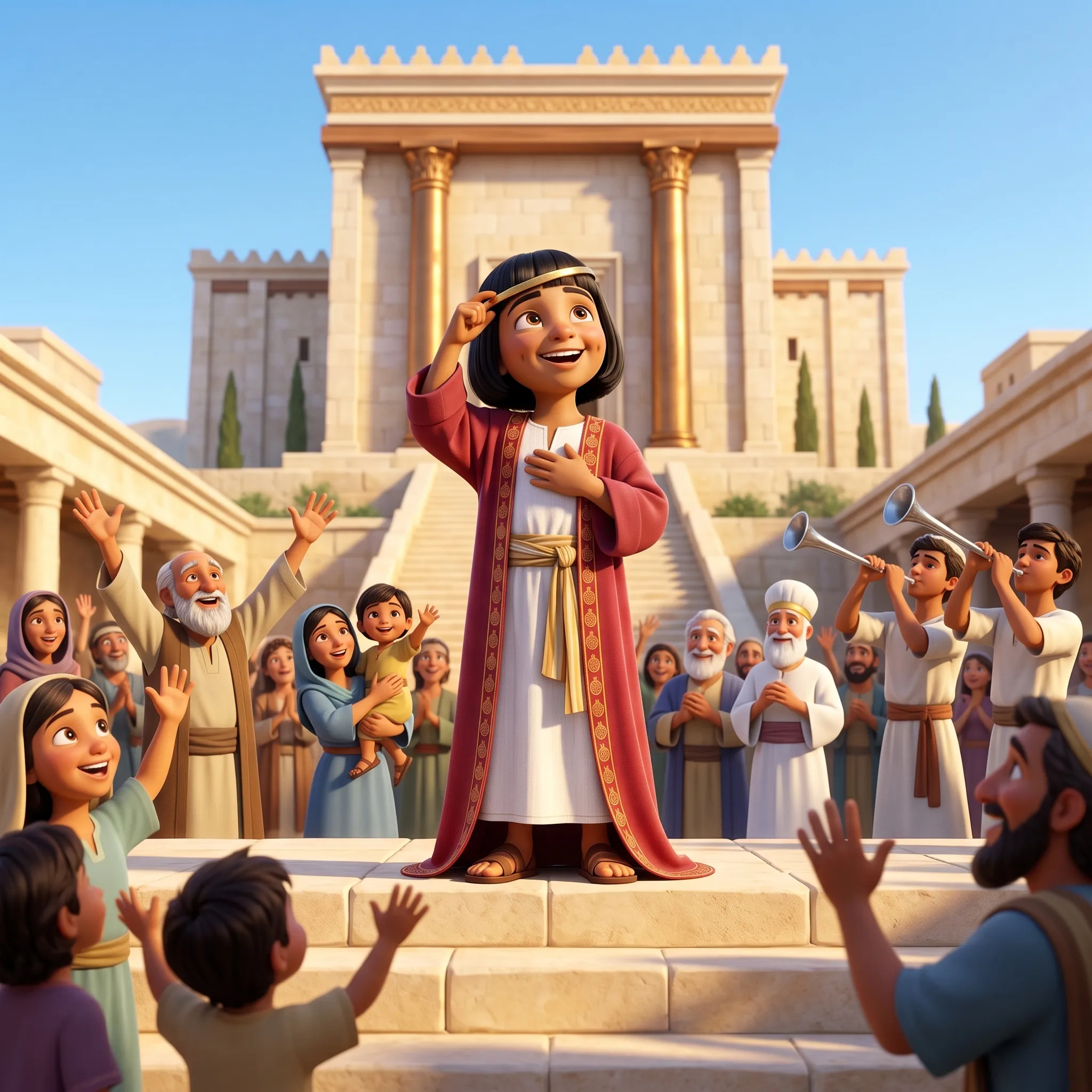
And Mordecai? The man who had worn sackcloth and ashes came out from the king "in royal clothing of blue and white, and with a great crown of gold," and a robe of fine linen and purple. And the city of Susa "shouted and was glad."
Here are four words from the Bible for what Esther's people had. Count them on your fingers with me.
"The Jews had light, and gladness, and joy, and honour."
Light. Gladness. Joy. Honour.
But Haman's day was still coming, months away.
And when that day came, Esther's people gathered together and stood up for their lives. And the Bible says, "No one could withstand them." The day that was meant for sorrow was turned the other way round. Or, as the old Bible words say, "it was turned to the contrary."
And after that, they rested.
And they made it "a day of feasting and gladness." They sent presents of food to one another. Imagine a neighbor knocking at your door with a basket of something good. And then you knocking at theirs.
Mordecai wrote to all of Esther's people, near and far: keep these days every year. Feast together. Send food to your friends. Give "gifts to the poor," too. Because this was the month "which was turned unto them from sorrow to joy, and from mourning into a good day."
Now, here is something I haven't told you yet. Long before, Haman had picked his day by casting Pur. The Bible says Pur means "the lot." A lot was a little thing you threw to help you pick, a bit like rolling dice.
So what do you think they named the happy days?
Purim! Named after Haman's lot. So every year, the name itself says: that plan got turned around.
Then Queen Esther wrote too, with Mordecai. Their letters went to all one hundred twenty-seven provinces, "with words of peace and truth." Esther's own word made Purim sure, "and it was written in the book."
Esther, who once had to keep her people a secret. Now her name was on a letter to her people in every corner of the kingdom.
And Jewish families still keep Purim every year. They feast, and send food to friends, and give gifts to people who are poor, just as that letter said. And they read Esther's story aloud, too.
Haman threw a lot to pick a day for sorrow. But another part of the Bible says that when a lot is thrown, it is the Lord who decides how it falls. And that is just what God did. He took Haman's day and turned it the other way round.
And God was with him. God was with her. God is with you, too.
Pull up the covers, little one. May the same God who took a day that was picked for sorrow and made it a good day... turn your hard days the other way round, too.
Keep listening in the app
Hear all 6 minutes with a subscription, which opens all 106. 6 stories are free, with offline listening and bedtime mode.
Quick answers about Esther and the First Purim
- Why is Purim called Purim?
- Haman cast Pur, which means "the lot", to choose the day he would destroy the Jews (Esther 3:7). After that day was turned to joy, the feast was named Purim after his lot (Esther 9:24-26).
- Why couldn't the king cancel Haman's letter?
- A law written in the king's name and sealed with his ring could not be reversed (Esther 8:8). So the king let Mordecai and Esther send a second letter allowing the Jews to gather and defend themselves on that day (Esther 8:11).
- What did Mordecai tell the Jews to do at Purim?
- To keep the fourteenth and fifteenth days of the month Adar every year as days of feasting and gladness, sending presents of food to one another and gifts to the needy (Esther 9:21-22). Queen Esther wrote a second letter to confirm it (Esther 9:29-32).
Talk about it together
Questions to ask
- Mordecai's letter went to every people in their own language. Why do you think it mattered that Esther's people could read it in their own words?
- We counted four words on our fingers: light, gladness, joy, and honor. Which of those words fits your best day this week, and why?
- On Purim, people send food to friends and gifts to people who are poor. If you could leave a basket at a neighbor's door, what would you put in it?
- Haman picked a day for sorrow, but God turned it the other way round. Can you remember a hard day that turned out better than you expected?
Esther and the First Purim memory verse for kids
“The Jews had light, gladness, joy, and honor.”
A prayer for bedtime
Dear God, thank You for turning Esther's day of sorrow into a day of joy. When I have a hard day, help me trust that You can turn it around. Help me share good things with my friends and with people who need them. Amen.
More Bible stories for kids
See every story
Queen Esther Saves Her People
Esther 2-7, 11 min, ages 3-8

Noah's Ark and the Great Flood
Genesis 6-9, 7 min, ages 3-8

David and Goliath
1 Samuel 17, 9 min, ages 3-8