Joshua Crosses the Jordan River Bible story for kids
The River That Stopped and the Stones That Remember. A gentle, age-appropriate audio retelling for calm family listening and bedtime.
Joshua 3-4. A 6-minute story for ages 3-8, about 8 minutes to read aloud.
Free audio preview
Hear the first two minutes of the narration, free and with no sign-up.
0:00 / 2:00

Keep listening in the app
Hear all 6 minutes with a subscription, which opens all 106. 6 stories are free, with offline listening and bedtime mode.
A little setup, without giving away the story
It is harvest time, the Jordan River is spilling over its banks, and God's people have no bridge and no boats. Joshua tells everyone to get ready, because tomorrow God is going to do wonders.
Listen for these moments
- 1What the priests carry on long poles at the very front
- 2The town far upstream that shares a name with the first man
- 3The question a little girl asks about twelve big stones
Joshua Crosses the Jordan River
The whole story: Joshua 3-4, retold for ages 3-8, about 8 minutes to read aloud
Imagine twelve big stones, sitting together in a field.
River stones, each one about as big as a grown-up can carry on one shoulder. They just sit there, in a place called Gilgal.
Now imagine a little girl, many years later, walking past them with her father. She tugs his sleeve. And she asks a question.
"What do these stones mean?"
That question was part of the plan, little one. Those stones were put there so children would ask it. So let me tell you the answer her father would give.
A long time before, God's people were camped beside the Jordan River. Moses had died, and now Joshua was their leader. Joshua had seen this land once before, long ago. Now it was right there, across the water.
But the river was full. It was harvest time, and the Bible says that at harvest the Jordan "overflows all its banks." Imagine it, wide and deep and loud, spilling up into the grass. No bridge. No boats.
God had already told Joshua, "as I was with Moses, so I will be with you."
So Joshua said to the people, "Sanctify yourselves" — that means, get ready for God — "for tomorrow the Lord will do wonders among you."
Wonders. Tomorrow.
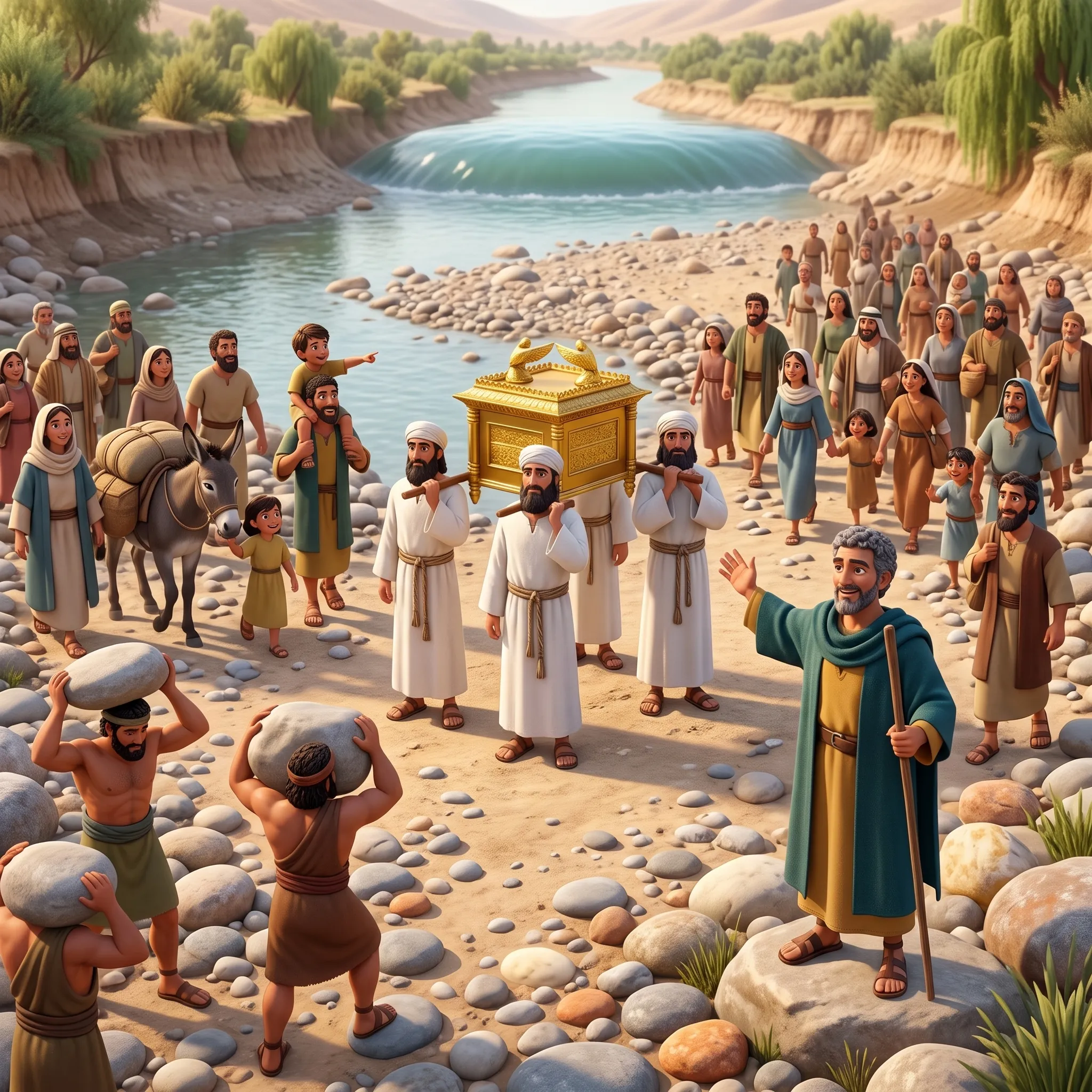
The priests would carry the ark of the covenant. Not Noah's ark, which was a boat. This ark was a wooden chest covered in gold, carried on long poles. It was the sign that God Himself was with His people, wherever they went.
The ark would go first. Everyone else would follow, far behind. About two thousand cubits, which is about half a mile.
Why so far? So that everybody could see which way to go, "for you have not passed this way before."
They had never walked this way before. But God's ark was going first.
Then Joshua told them, "By this you shall know that the living God is among you." And he told them what would happen. When the priests' feet touch the river, the water will stop. "The waters that come down from above shall stand in one heap."
And that is exactly how it went.
The people left their tents. The priests lifted the ark onto their shoulders and walked toward the river. Maybe the people stood on tiptoe, way back, trying to see. Closer. Closer.
And the priests' feet dipped in the edge of the water.
Just the edge. Just the bottoms of their feet.
And the river stopped.
Far, far upstream, at a town called Adam — yes, the same name as the very first man — the water coming down "rose up in one heap, a great way off." And the water below simply ran away downstream to the Salt Sea.
And there it was. A riverbed, wide and open under the sky. Nothing towering over anybody. Just empty.
The priests walked out into the middle, and they stood still. On dry ground. Not mud. Dry ground.
And then the people crossed. Imagine the grandmas and the babies, the baskets and the bundles, the sandals on the pebbles. And the Bible says, "the people hurried and passed over."
I think I would have hurried, too.
But the priests did not hurry. They stood right there in the middle with the ark, the whole time. Until the very last person was across.
Then God told Joshua to send twelve men back, one from each tribe of Israel. Each man went to the spot where the priests were standing, picked up a stone, and put it on his shoulder. I wonder if those stones were still cool from the river.
Then Joshua called to the priests, "Come up out of the Jordan!"
And the moment the priests' feet stepped up onto the bank... the water came back. Back to its place. Over all its banks, as before.
Everyone was already safe on the other side, watching the river come home.
That night they camped at Gilgal, near a city called Jericho, but that is a story for another night. There Joshua set up the twelve stones.
Then he told the people: one day your children will ask, "What do these stones mean?" And here is what you will say.
"Israel came over this Jordan on dry land."
That's the answer.
It wasn't Joshua who stopped the river. It wasn't the priests. God dried up the Jordan, just as He had dried up the Red Sea. Some of those mothers and fathers had walked through the Red Sea when they were children. Others had not even been born yet. Now every one of them had a river story of their very own to tell.
And why? "That all the people of the earth might know the hand of the Lord, that it is mighty."
And that day, the Bible says, God made Joshua great in the eyes of all Israel. They honored him, just as they had honored Moses, all the days of his life. God had kept His word. As He was with Moses, so He was with Joshua.
And the stones? They just sat there, big and quiet, waiting for a child to wonder. And I like to think that every time a child asked, someone who loved them told the story all over again.
And God was with him. God was with her. God is with you, too.
Feet up now, little one. May the same God who gave His people twelve river stones just so children would ask about them... always give you someone who loves you to ask, and a true story to hear.
Keep listening in the app
Hear all 6 minutes with a subscription, which opens all 106. 6 stories are free, with offline listening and bedtime mode.
Quick answers about Joshua Crosses the Jordan River
- How did the Israelites cross the Jordan River?
- As soon as the priests carrying the ark of the covenant stepped into the edge of the water, the river stopped and rose up in a heap far upstream at the town of Adam. The people crossed on dry ground while the priests stood in the middle of the riverbed (Joshua 3:14-17).
- Why did the ark of the covenant go first?
- The ark was the sign that God was with His people, so it led the way, with everyone else about 2,000 cubits behind so they could see which way to go, because they had never passed that way before (Joshua 3:3-4).
- What do the twelve stones in Joshua 4 mean?
- Twelve men, one from each tribe, each carried a stone from the riverbed, and Joshua set them up at Gilgal. When children asked what the stones meant, parents were to tell them that Israel crossed the Jordan on dry land (Joshua 4:1-8, 4:20-22).
Talk about it together
Questions to ask
- The priests had to step into the deep, rushing river before the water stopped. How do you think their feet felt in that very first moment?
- Everyone else hurried across, but the priests stood still in the middle of the riverbed until the very last person was over. Why do you think they waited?
- Twelve men each carried a big river stone on one shoulder so people would remember. If you could keep one thing to help you remember a special day, what would it be?
- Every time a child asked about the stones, someone told the river story again. What is a story from our family that you like to hear again and again?
Joshua Crosses the Jordan River memory verse for kids
“Israel came over this Jordan on dry land.”
A prayer for bedtime
Dear God, thank You for stopping the river so Your people could walk across on dry ground. Help me remember the good things You have done for me, and tell them to others. Amen.
More Bible stories for kids
See every story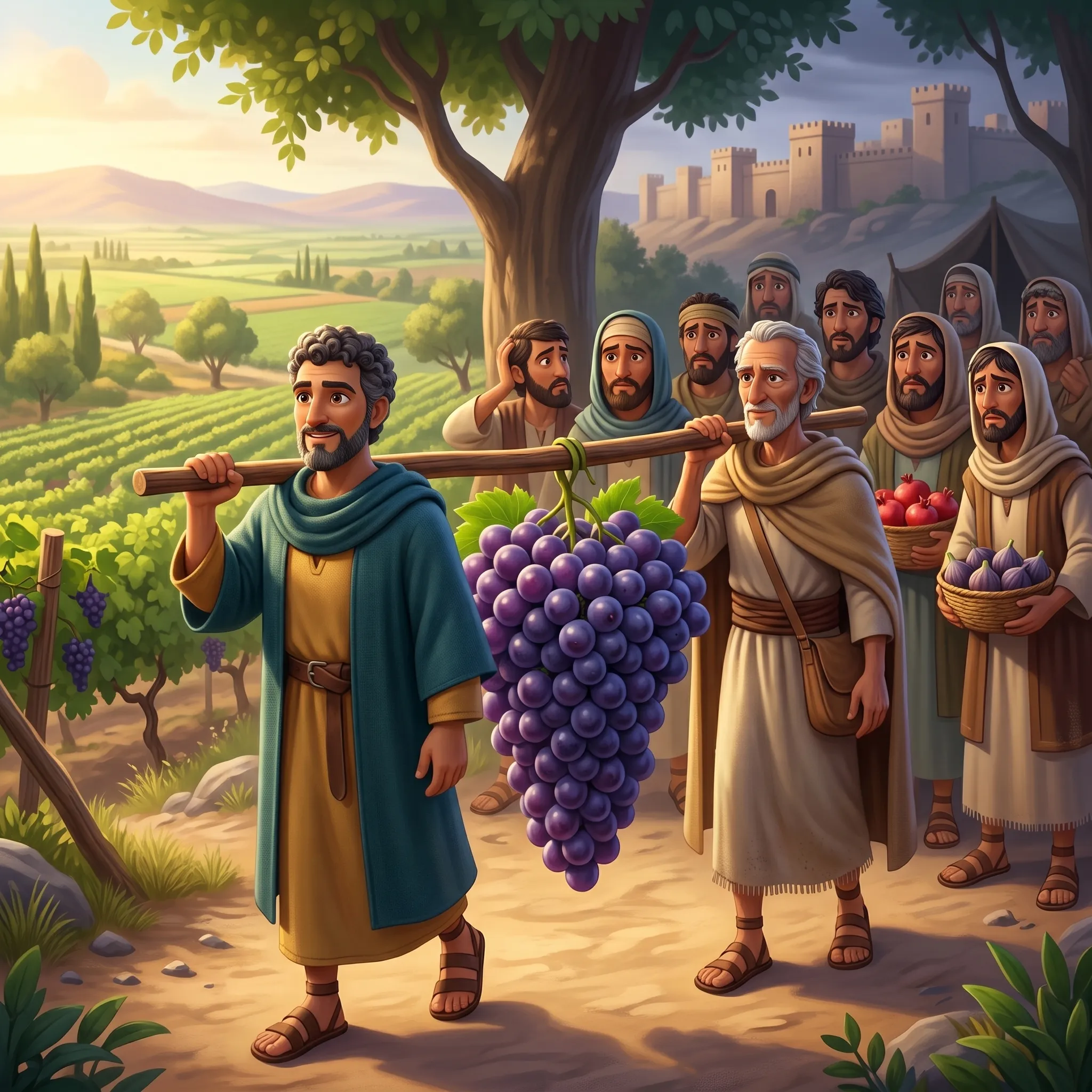
The Twelve Spies
Numbers 13-14, 8 min, ages 3-8
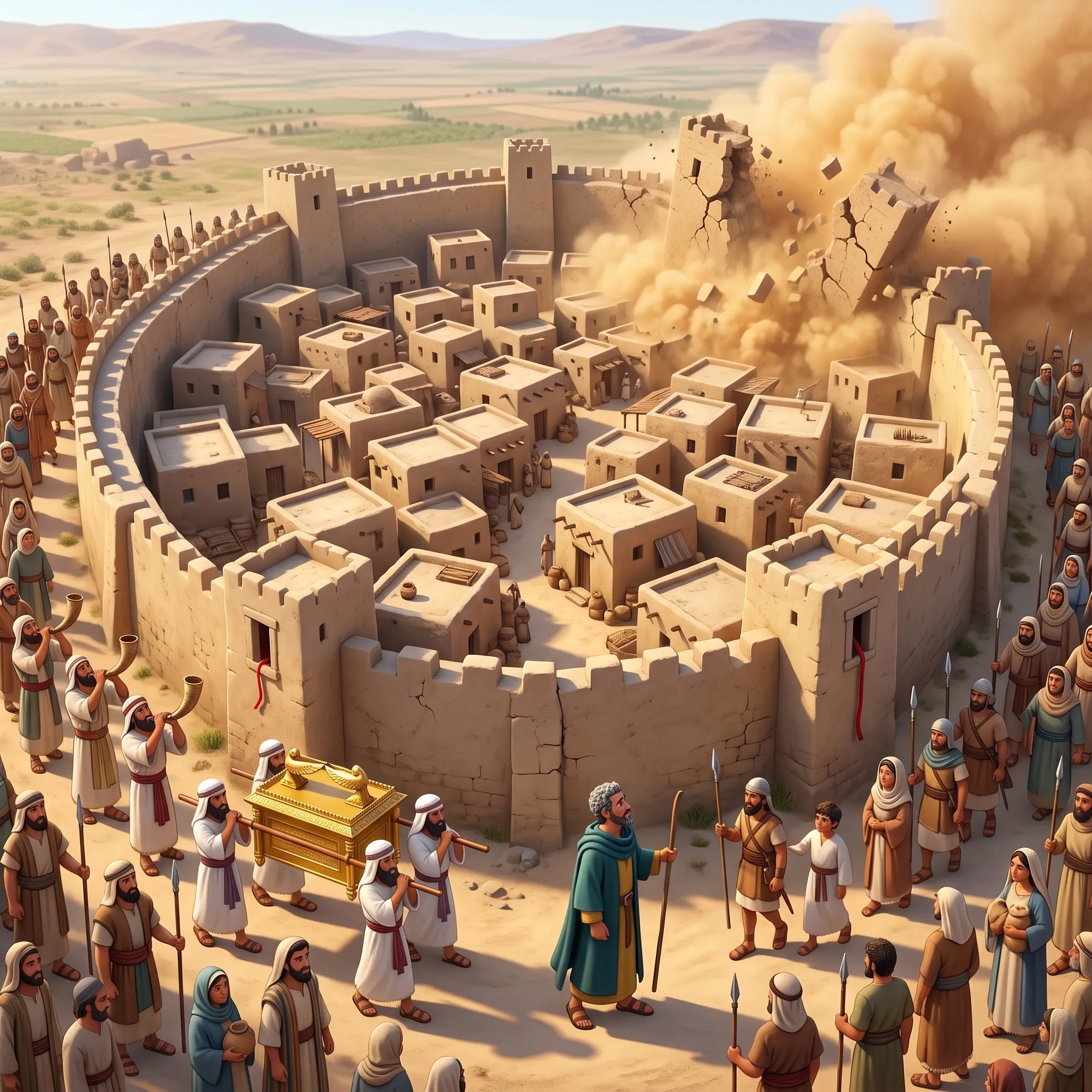
Joshua and the Battle of Jericho
Joshua 6, 8 min, ages 3-8
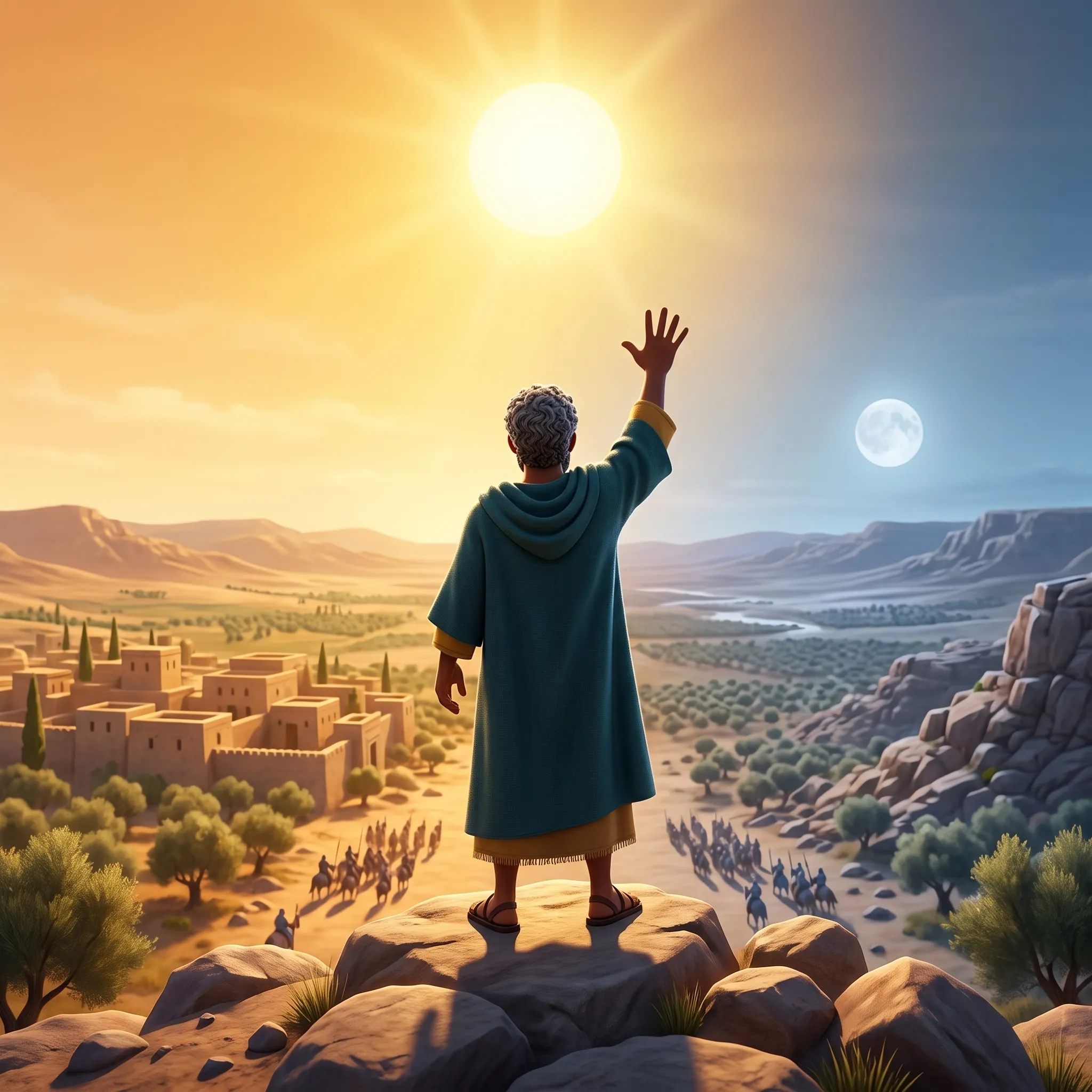
Joshua and the Day the Sun Stood Still
Joshua 10:6-14, 3 min, ages 3-8